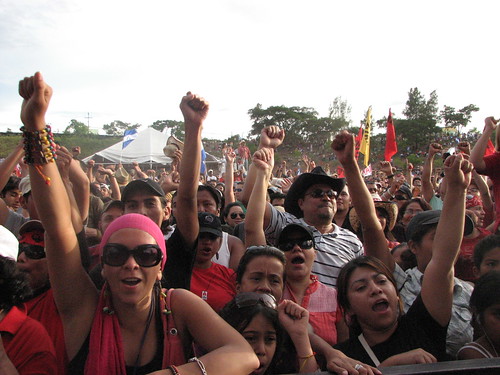
Showing posts with label FNRP. Show all posts

Monday, August 10, 2015

!Todos Somos Indignados - We Are All Indignant!


On July 31st, Honduran indignad@s which included members of the political opposition, indigenous activists, human rights defenders, students ended their hunger strike which was begun in June to protest the massive corruption and attacks on the political and economic well-being of the Honduran people (see the Honduras Solidarity Network statement below). The massive torchlight marches of thousands of Hondurans are continuing and the people continue to demand President Juan Orlando Hernandez's resignation and prosecution of all those responsible for the corruption. The marches also continue to denounce the attacks on the students, campesinos, indigenous and working people in general and the political repression. This is a time when the movement is re-accessing their tactics and possibilities for winning change. We will be publishing more analysis and information in upcoming posts. 

On July 27th the campesino movement supported by human rights defenders, social movements and LIBRE blocked highways around the country demanding agrarian reform (see article by Charity Crouse below). 
Chabelo and his mother leaving
 the prison in Ceiba
Photo via Dunia Aracely Pérez

On July 24th campesino political prisoner, Jose Isabel "Chabelo" Morales Lopez was released from prison pending another re-trial after his conviction was overturned. He has served almost 7 years in prison. His trial (the third trial!) ia currently scheduled for September 28 and La Voz de los de Abajo joins in the call for support for his permanent freedom. Pressure from international and Honduran human rights and social justice movements was crucial in winning his freedom and will be crucial for his definitive liberty. 

Please sign the petition HEREHere
More information Here

:::::::::::::::::::::::::::::::::::::::::::::::::::::::::::::::::::::::::::::::::::::::::::::::::::::::::::::::::::::
Which Direction for Honduras
By Charity Crouse

Photo by Duñia Montoya via Bartolo Fuentes
On July 27, 2015 Hondurans Central Nacional de Trabajadores del Campo (CNTC),  Frente Nacional de Resistencia Popular (FNRP), organizations comprising Via Campesino, and maquila workers from the village near Progreso blocked the highway between  Tela and San Pedro Sula for four hours to compel the Honduran National Congress to address the myriad issues confronting campesino communities. These issues include the recent revelation of corruption by former Congress leader and current president Juan Orlando Hernandez of siphoning off millions of dollars from the Instituto Hondureno de Seguridad Social (IHSS) to fund his presidential campaign. This action corresponds to those for the last eight weeks by the movement which calls itself Indignados but it also includes long-standing policies of criminalizing land reform activists and targeting communities that tend the land. Currently, more than 5,000 face charges related to the land struggle while many more fight for recognition of land titles awarded since 2008. Farmers and their families are routinely evicted, imprisoned and have even been murdered as land rights are destroyed by the imposition of mining and other resource acquisition interests. Additionally, many of those with corporate and monied oligarchical family ties collude to dispossess entire communities of families of their sovereignty and their means of survival.

In 1962, sweeping land reform measures were passed in Honduras as part of the movement of farmers (campesinos) and indigenous people that united with workers throughout Latin America. These reforms enable communities that work land that was not specifically privately owned to be legally turned over to campesinos for future development. Little land was privately owned at the time and campesino communities and organizations grew throughout Honduras. The Instituto Nacional de Agricultura (INA) was established as an administrative body to coordinate land use practices and designations.

Throughout the 1980s, campesino communities and other leftist activists experienced extensive repression by right-wing governments dominated by an oligarchy who were the primary private landowners in the country and who controlled the private industry along with international companies like Standard Fruit. The U.S. military intervention in Central America in the 1980s basically occupied Honduras and supported the local oligarchy by training and supporting the Honduran troops and death squads that often tortured, disappeared and assassinated resistance leaders and members at their behest. Many of those oligarchs thrived by concentrating wealth and land usage through the proliferation of neoliberal free trade agreements like North American Free Trade Agreement (NAFTA). While the development of industry offered job opportunities to many poor Hondurans, the agricultural and cultural base of the nation was dramatically altered as social movements that fought for human rights and economic and social justice were further repressed. Hundreds of human and environmental rights activists were assassinated. 

For those working for the rights of the land and those who sustained it, this repression was codified in law with the passage of the Law of the Modernization of Agriculture in 1993. The Law of Modernization expanded the entrenchment and entitlement of private landowners and industrialists. In addition, the role of INA in mediating land usage issues was turned over to a newly-formed Council of Land and Property, which now regulates land registries and titles. 

The impact has been debilitating for campesino communities. The proliferation of mining and hydroelectric interests that are often owned by foreign companies and officially incorporated and registered on property claimed by the oligarchy has increased to now encompass 35 percent of the public land of Honduras. That means that 35 percent of land once guaranteed to campesino communities has now been absorbed into the nexus of private landowner/corporate control. These concessions along with consolidation of agro and other business interests often operating under similar circumstances as the mines and dams, have corresponded with the increased militarization and expansion of the private security apparatus that forces campesino communities off their lands. Further militarization and security encroachments are often justified under the guise of fighting the War on Drugs, even as the government is implicated in collusion with the proliferation of the narco-traffickers, as revealed in a cable from the former U.S. Ambassador to Honduras leaked by Wikileaks. In practice, though, this security regime functions to safeguard private interests at the expense of entire communities. One more publicized and notable example is the ongoing struggle of the communities in the Aguan Valley that were violently repressed by the now-deceased Miguel Facusse.

Proceedings for campesino communities to assert their land rights are expensive, cumbersome, time-consuming and fraught with bureaucratic fraud. The arrests and prosecutions of campesinos takes time and resources away from the mostly impoverished communities.

CNTC campesinos detained in La Paz July 2015
Photo Franklin Almendares
In April of 2014, the CNTC and other land reform activists proposed the Law of Integrated Agrarian Reform. The law seeks to dismantle the regressive provisions of the Law of Modernization and restore autonomy and legal security to the campesino communities of Honduras. Unfortunately, while the National Congress and its leaders were busy defrauding the Honduran people and dismantling their public systems, the bill languished in the Committee for Agricultural and Rural Development without being read. The status quo of mismanagement, bureaucratic corruption, collusion between the oligarchy and predatory foreign interests, and the divestment of Honduran wealth and resources that characterizes the current imbroglio over the IHSS has also played out in the land and agricultural policies. Not only has the health of the Honduran people been devastated by this disaster, but so too has the earth that provides the economic system that sustains the entirety of the nation.

As such, Hondurans together put their bodies on the line to stop not only the police and government, but also the whole system that divests Honduras of its health and wealth. As the momentum continues to build, let us take inspiration to act as we see communities merge into Honduras’ future direction, a direction that holds great lessons and promise for the future of the world. 

:::::::::::::::::::::::::::::::::::::::::::::::::::::::::::::::::::::::::::::::::::::::::::::::::::::::::::::::::::
 El español sigue el ingles

July 30 2015
Statement from the Honduras Solidarity Network  of North America

Honduran people demand an end to corruption,  impunity, and militarization


As members of The Honduras Solidarity Network (HSN) of North America, we declare our solidarity with the many thousands of Hondurans who have been protesting for months with vigils, marches with torches, and an ongoing hunger strike. We support their demands for the resignation of President Juan Orlando Hernandez; the installation of an international independent commission (CICIH), to investigate the government corruption after the massive theft of hundreds of millions of dollars from the Honduran Social Security Institute (IHSS) by the ruling National Party; and a thorough investigation into the more than 3000 deaths in the health system during this crisis. This is a peoples’ movement in which the political opposition, the social movements, and the majority of the society are confronting obstacles to a better future for their country. 

We recognize that this outrageous and extraordinary corruption is one more example of actions outside the law, and against all the democratic principles committed by the Honduran political and economic elite, supported by the US government, which began with the 2009 military coup, and has continued with the subsequent coup governments. The most recent corruption scandal comes after 6 years of attacks against human rights defenders, agrarian and indigenous activists, and the entire political and social opposition movement. It comes as part of an attempt to consolidate illegitimate power that includes the removal of more independent Supreme Court justices in 2012 when the current president was the head of Congress and the subsequent decision, after Hernandez came to power in 2014, by the new court to declare null and void the anti-reelection clause of the Honduran constitution.

We strongly condemn the fact that the US Government’s support for the regime in Honduras continues. In fact as corruption was devastating the public health system, creating conditions in which thousands of people died; as the Honduran people and a diverse political opposition united their voices demanding President Hernandez’s resignation, the US Ambassador announced, “Our relationship (with the Honduran government) has never been better”. We are deeply concerned that the very few statements/actions by the US government about impunity and corruption, such as the agreement brokered between Transparency International, Association for a More Just Society, and the Honduran government,  are aimed at  whitewashing the crimes of the Honduran regime with token investigations and the possible prosecution of a handful of officials in order to gain support in the US for the so called “Alliance for Prosperity” — the $1-billion dollar package proposed for the countries of the Northern Triangle under the Biden Plan in the U.S. Congress. The rise of the recent movement against corruption is a demonstration of the failure of the existing agreement.  

We reject the common agenda the United States government  shares with international corporations, the IMF and the Honduran oligarchy represented by Juan Orlando Hernandez.   That agenda is an aggressive neoliberal program to privatize education, health care, and infrastructure while putting the country’s land and resources in the hands of foreign mining companies, hydroelectric, and mega-touristic projects, and powerful agribusiness interests.  This agenda is backed up by the US economic and military power. As if to make clear its support for the regime the US recently sent another group of 300 Marines to Honduras and conducted military helicopter exercises even as the corruption scandal was being revealed. 

We stand in solidarity also with the call from the indigenous, campesino, and trade union organizations, and other social sectors for solutions to the labor, agrarian, and territorial crises that affect their vulnerable members and communities. We are outraged and concerned about the criminalization of their movements and the ongoing violence against them which is the responsibility of the Honduran State. 

We are profoundly concerned with the continuing attacks on, and obstruction of the work of human rights defenders and journalists, without whom the population is totally defenseless against impunity and corruption. 

We support the demands of the Honduran people and we demand that the US government stop supporting militarization and impunity in Honduras now: 

1. That President Obama and the US Congress immediately stop military and police training, and military aid to Honduras!

2. That the US Congress not pass or fund the Alliance for Prosperity or other taxpayer-funded schemes that further militarize governments and increase human rights violations. 

3. That the US Embassy stop lending verbal and material support to the illegitimate government of President Juan Orlando Hernandez and instead demand of his administration an end to impunity and criminalization of human rights defenders and social movement leaders.   

4. We continue to demand an investigation for all of the assassinations committed in Honduras since the military coup of 2009, and punishment for the both the intellectual and material authors of those crimes.

July 30, 2015
Honduras Solidarity Network USA/Canada
D19/FNRP-Partido, LIBRE—EE.UU-Canadá
*****************

Declaración de la Red de Solidaridad de Honduras EEUU/Canada
30 de Julio 2015

La declaración que sigue fue presentada a funcionarios en la embajada norteamericana en Tegucigalpa el dia 31 de Julio por una delegación de la HSN dirigida por Alliance for Global Justice. El proposito era de expresar bien nuestra posición en solidaridad con el pueblo de Honduras y nuestra inconformidad con la política de los EEUU en Honduras. 

El Pueblo hondureño exige un alto a la corrupción, a la impunidad, y a la militarización

30 de Julio, 2015

Reconocemos que esta intolerable y como miembros de la Red de Solidaridad norteamericana con Honduras (HSN por sus siglas en inglés), nosotros declaramos nuestra solidaridad con los muchos miles de hondureños que han estado protestando por varios meses con vigilias, marchas con antorchas, y con una huelga de hambre indefinida. Apoyamos las exigencias de la renuncia del Presidente Juan Orlando Hernández por parte del pueblo; y la creación de una Comisión Internacional Independiente que investigue la corrupción gubernamental después del masivo y descarado robo de cientos de millones de dólares de los fondos del Instituto Hondureño de Seguridad Social (IHSS) que fueron usados para financiar la campaña presidencial del Partido Nacional actualmente en el poder; y también una profunda investigación de los casos de más de 3000 personas beneficiarias de este sistema de salud que murieron durante esta crisis. Este es un movimiento del pueblo en el cual los grupos de la oposición política, los movimientos populares y la mayoría de la sociedad hondureña está enfrentando muchos obstáculos para lograr un futuro mejor para su país.
carada corrupción es un ejemplo más de las acciones fuera de la ley, y contra los principios democráticos encabezados por la élite política y económica de Honduras, apoyada por el Gobierno de los Estados Unidos que se inició con el golpe militar del 2009, y ha continuado con los subsecuentes gobiernos golpistas. El escándalo más reciente de corrupción se da después de 6 años de ataques permanentes contra los defensores de los derechos humanos, contra los indígenas y trabajadores del campo, y contra todo el movimiento politico y social de oposición. Todo esto surge como parte del intento de consolidarse como un poder ilegítimo quebrantando la actual Constitución para lograr la reelección.  Este proceso se inició con el despido injustificado de varios magistrados independientes de la Corte Suprema de Justicia en el 2012 cuando el actual presidente era el líder del Congreso Nacional, y la subsecuente decisión, después que Hernández por medio de un fraude electoral se convirtiera en el presidente de Honduras en el 2014. La actual corte suprema de justicia  actuando fuera de la ley, invalidó y declaró nula la cláusula de la anti-reelección de la constitución hondureña.

Con mucha firmeza condenamos el hecho de que el apoyo al régimen de Honduras por parte del gobierno de los Estados Unidos continúa. Es más, mientras la corrupción devastaba el sistema público de salud, lo que creó las condiciones por las que muchos miles de personas murieron; mientras el pueblo hondureño y una diversidad política de oposición unían sus voces exigiendo la renuncia del Presidente Juan Orlando Hernández, el embajador de Estados Unidos anunció: “Nuestra relación con el gobierno de Honduras nunca ha estado mejor”

Estamos profundamente preocupados por las declaraciones/acciones por parte del gobierno de los Estados Unidos acerca de la impunidad y la corrupción, como el caso de la ruptura del tratado entre Transparencia Internacional, la Asociación por una Sociedad más justa, y el gobierno de Honduras, están dirigidos a encubrir los crímenes del régimen hondureño con investigaciones de fachada y el posible juzgamiento de unos pocos oficiales para ganar apoyo en los Estados Unidos para el programa denominado “Alianza para la Prosperidad” - El paquete de un billón de dólares propuesto para apoyar los Países del Triángulo Norte como parte del Plan presentado por el  vicepresidente Biden ante el Congreso de los Estados Unidos. El incremento del movimiento de protesta contra la corrupción es una muestra de que la existencia del presente acuerdo ha fallado.

Repudiamos la agenda común que el gobierno de los Estados Unidos comparte con corporaciones internacionales como el Fondo Monetario Internacional y la oligarquía hondureña representada por Juan Orlando Hernández. Esa agenda obedece a un programa neoliberal agresivo que busca privatizar la educación, la salud y la infraestructura mientras ponen la tierra del país y los recursos naturales en manos de compañías mineras extranjeras, así como los proyectos hidroeléctricos y los proyectos Mega-Turísticos y los poderosos intereses de la agro industria. Esta agenda es respaldada por la economía estadounidense y el poder militar. Para demostrar su apoyo al régimen de Juan Orlando, el gobierno de los Estados Unidos recientemente envió 300 Marines más a Honduras y han realizado maniobras militares usando helicópteros incluso, a pesar de que el escándalo de la corrupción ya había sido revelado.

Estamos en solidaridad también con el llamado de la población indígena, los campesinos, las organizaciones obreras y sindicales, y con otros sectores sociales que buscan soluciones sindicales, agrarias, y a la crisis territorial que afecta a los miembros y comunidades más vulnerables. Estamos muy indignados y preocupados acerca de la criminalización contra sus organizaciones y la continua violencia contra ellos con la responsabilidad directa del Estado Hondureño.

Estamos profundamente preocupados por los contínuos ataques a y la obstrucción del trabajo que realizan los defensores de derechos humanos y los periodistas, sin el trabajo de estos organismos la población estaría totalmente desprotegida contra la impunidad y la corrupción.

Apoyamos las exigencias del pueblo hondureño, y demandamos que el gobierno de los Estados Unidos suspenda la ayuda militar y la impunidad ahora! Exigimos que:

1. Que el Presidente Obama y el Congreso de los Estados Unidos suspendan inmediatamente los entrenamientos militares y policía, así como la ayuda militar a Honduras!

2. Que el Congreso de los Estados Unidos no apruebe el Fondo de la Alianza para la prosperidad u otros planes o proyectos financiados con nuestros impuestos, y que sólo sirven para militarizar más a los gobiernos y el aumento de las violaciones a los derechos humanos.

3. Que la Embajada de los Estados Unidos no siga brindando apoyo verbal y material al gobierno ilegítimo de Juan Orlando Hernández y que en cambio se le exija que ponga término a la impunidad y la criminalización contra los defensores de los derechos humanos y de los líderes del movimiento social.

4. Continuamos exigiendo una investigación exhaustiva de todos los asesinatos cometidos en Honduras desde el golpe de estado del 2009, y exigimos castigo para los autores materiales e intelectuales de estos crímenes.

30 de Julio
Honduras Solidarity Network USA/Canada 
Red de Solidaridad con Honduras, EEUU/Canada

Wednesday, June 17, 2015

Honduras Delegation May 2015

May 25th Protest Against Corruption, Tegucigalpa
From May 22- June 2 a delegation from La Voz de los de Abajo, a member of the Honduras Solidarity Network,  traveled in Honduras, participating in events for the International Week Against Forced Disappearances with the Honduran human rights organization COFADEH and visiting other organizations in the resistance movement, human rights defenders, campesino communities under attack and the campesino political prisoner, Chabelo Morales Lopez. We were there as the protest movement against corruption and impunity was just beginning to heat up—— that movement now has grown to massive protests with many thousands of people in the streets in nearly every city in the country on a daily basis for the past three weeks.

Honduras May 2015 International Week Against Forced Disappearances Past and Present — Impunity Remains
Part of the content of this blog post  is from the Delegation Report and Statement to be published soon.
Photos of the "disappeared" at Cofadeh's 
office in Tegucigalpa
COFADEH (Committee of the Families of Disappeared Detainees) was founded in 1982 by families of people who were forcibly disappeared by military and paramilitary forces linked to the Honduran and Salvadoran military, the US supported “Contras” (a counter revolutionary paramilitary fighting against the Sandinistas in Nicaragua), and U.S. covert operations in the region. Honduras was used as a US military base against the Sandinistas and against the insurgency of the FMLN in El Salvador but was not officially at war itself. Nonetheless by the end of the conflict there were more than 200 persons documented to have been disappeared in Honduras.  Among those disappeared are Tomas Nativi - the husband of COFADEH’s coordinator, Bertha Oliva, disappeared in 1982. 

Our delegation was accompanied by COFADEH members in traveling the Ruta (Path of Historic Memory) which began in the city of Tegucigalpa in COFADEH’s office, passes their original office site near a police and Honduran Bureau of Investigation (DNIC) office. One of the COFADEH compañeras described answering the door bell at the original office in the mid-1980’s and finding a DNIC officer who immediately pointed a gun at her head and told her to deliver a message that COFADEH must stop investigating the case of one of the disappeared. She was only 14 at the time and had joined COFADEH after her brother’s disappearance.  

Delegation member at El Reventon

The Ruta de Memoria Historica then leaves the city and goes to the site of a clandestine cemetery (El Reventon) used by the Honduran military to dispose of the bodies of the disappeared. The site was discovered by COFADEH after a witness finally overcame his fear later in the 1990’s and disclosed the location. The Ruta includes two former clandestine detention and military sites (the Casa de Terror/Terror House and the Cuartel de los Contras/ Contra Barracks)  and at the end of the Ruta is the COFADEH Center against Forgetting (El Hogar en Contra el Olvido), a beautiful mountainside center for meditation, retreats and conferences with a garden of trees honoring the disappeared of the 1980s. 

El Hogar en Contra el Olvido - COFADEH
House of Terror
Blood spatters found
The most difficult part of the journey on the Ruta was visiting the “Casa de Terror” (Terror House) located not far from the cemetery on a property that was owned by a military officer and is now abandoned. This location has been visited by survivors of kidnapping and torture who confirmed that they were held there. Blood splatters that were identified by chemical testing are outlined in black marker. On the property there are two odd concrete structures— concrete boxes with concrete lids that have only a very small opening, resembling some kind of detention box. 

Delegation member at "Terror House"
One group of survivors were young high school and university students, kidnapped by masked men thought to be part of the Honduran death squad military Battalion 316. The survivors tell the story of being held for 8 days, tortured with beatings and electricity, starved and terrorized. It is believed that they were eventually released rather than being murdered only because the father of two of the students was a highly placed official in the Honduran government - he was beaten by the death squad members when the students were kidnapped from his home, but the youth were finally released.It is unknown how many people were detained at the site,  tortured and then murdered.  The presence of the disappeared is not only felt from the victims of the 1980’s who have yet to find justice for their loved ones -- new disappearances continue. 

Since the military coup in 2009 the practice of forced disappearances, detentions and torture has returned to Honduras.  On Tuesday, May 26th our delegation participated in a press conference with Bertha Oliva, coordinator of COFADEH and Jaquelin Jimenez, the sister of Donatilo Jimenez who was disappeared from his workplace, during his work shift,  on April 8 and has not been found either alive or dead. Donatilo was a long-time member of the union of employees of the National Autonomous University of Honduras (SITRAUNH) and past president of his local union in La Ceiba. Before his disappearance he told his family of labor conflicts with the university administration regarding security for workers at  the campus where he worked; the presence of organized crime on the university property and  collusion of university security guards with the criminal gangs. Donatilo was also still active in the union and was participating in a slate of workers running for positions in the regional SITRAUNH. The slate had to withdraw after his disappearance. 

Press Conference May 26th
photo by Defensores En Linea
Members of SITRAUNH from Tegucigalpa and the northern La Ceiba region attended the press conference in COFADEH’s office. They talked of the many conflicts with the university administration both regionally and at the national level, especially since the coup. The rector, Julieta Castellanos, is very close to President Juan Orlando Hernandez who recently arranged for a decision to change the government university rules so she could serve another term as rector. 

The family does not know what exactly happened to Donatilo the day he disappeared. At first local university officials claimed that he had left work in his car, although no one identified him,  which was found abandoned; later officials said that he was killed and that they have someone arrested, but with no details and without Donatilo's body.  Donatilo’s sister explained that after Donatilo’s disappearance, the university administration did not issue any statement, show any concern, investigate what happened or call for any investigation into his disappearance. When COFADEH accompanied the family to the site of his disappearance they were first denied access to search for him, then they were told they could enter but with a warning that it was unsafe which caused the team to decide not to search the extensive grounds of the campus. Donatilo's family insist that they want a real investigation that uncovers the intellectual and well as material authors of any crime. The university authorities have not only been uncooperative but the highest level administration of the National Autonomous University has had a lawsuit for “slander and damages” filed against Donatilo’s sister and his wife for their public statements about Donatilo’s concerns before he disappeared.  

Gladys Lanza at C-Libre event
The use of defamation charges is the latest weapon used by the government and oligarchy against human rights defenders, victims of abuses, and journalists. On Wednesday, May 27th, we attended an event held by the organization C-Libre, an advocate for protection of journalists and the freedom of expression, in which they presented their report on attacks against journalists for the year 2014 and also gave awards to human rights defender Gladys Lanza and journalist Gilberto Gálvez. Gladys Lanza is a member of the human rights organization VIsitación Padilla which focuses on women’s rights. She is currently facing time in jail after a prominent head of an NGO  filed a defamation lawsuit against her after her organization took on the case of a woman former employee who accused him of sexual harassment and violation of her rights. Besides Gladys Lanza and the Jimenez family, at least two journalists also are facing these charges and the indigenous and environmental activist, Bertha Caceres of the Lenca indigenous organization COPINH has been threatened with similar legal action after she denounced the murder of a member of COPINH this spring. 

COFADEH documents and maintains the historic memory of the disappeared both past and present and is a constant voice in representing the voices who demand, “they were alive when they were taken, we want them back alive”. 
They have a website  Cofadeh and the electronic press site, Defensores En Linea

More reports from the delegation coming soon
Unless otherwise noted, all photos by V. Cervantes

Victoria Cervantes
for La Voz de los de Abajo
June 11, 2015


Wednesday, January 28, 2015

San Pedro Sula - Resistance March January 27, 2015


San Pedro Sula, January 27, 2015
V. Cervantes


In San Pedro Sula, I accompanied the  FNRP march  as it took over the main boulevard leading from SPS to Choluma at around 4pm  and walked very slowly for more than an hour and half to the toll booth station; this caused a back-up of traffic for many miles back into SPS. Arriving at the tool booths the protest blocked off all but one lane and the cars that had been behind the march began to pass through the booth. Urged by the protester to “Don’t pay the toll!” the cars and trucks began zooming through without paying. The resistance then unblocked the other lanes and hundreds of vehicles began going through without paying. It wasn’t until after 6pm that the protest ended and the still heavy traffic began paying tolls again. 
Padre Fausto Milla

The march itself was not massive,  but very spirited and organized. There were representatives from trade unions, student organizations, teachers' unions, FNRP, Libre (including the LIBRE congressman from SPS, Edgardo Castro), social justice groups and activists such as Father Fausto Milla, left groups and representatives of a campesino group that was recently evicted from their land in Choluma, Cortes. There was an impressive amount of support from the public for the march. The cars that were stuck behind the march for 2 hours were mainly supportive; the drivers were honking in rhythm with chants and giving the thumbs up signs out the windows. The issue of the increase in tolls is a big issue for the people in the Sula Valley and that was evident in the shouts of encouragement given by bystanders and motorists.

Edgardo Castro, Libre Congressman
There was a substantial National Police presence but they did not threaten the march even when it blocked off the highway. There was only one negative incident in which a driver came down the shoulder of the road and pulled out a pistol threatening the protest but protest organizers and the police responded and he surrendered his pistol. It later appeared that the police released him when the protest ended. 


Thursday, January 15, 2015

Protests in the Sula Valley

Información con "links" en español sigue el ingles

Protests in Progreso and San Pedro Sula
A lively protest movement in Progreso, San Pedro Sula and nearby towns is organizing against the increase in toll fees and government waste and corruption related to toll booth and road "upgrades".  Tolls have been increased 100% in the Sula Valley while the government has also created public-private partnerships to build new toll roads on the major highway connecting the capital city of Tegucigalpa in the Southwest to other cities. Private companies both domestic and foreign are making money from this privatization while costs keep rising for motorists, small agricultural producers trying to get their products to market, taxi drivers, and the public in general. Protests began in late December but in January have gotten bigger and frequent. A retired teacher was arrested at a protest on January 2nd, there were more protests and most recently, on January 13th, hundreds of people walked from Progreso to the San Pedro Sula toll booth in a protest march. 
The FNRP, LIBRE, ERIC-SJ, organizations of poor residents (pobladores), teachers, campesinos and more are participating in the protests which are part of the Honduran people's rejection of the current government's intense neoliberal economic offensive. 


Thursday, May 15, 2014

Action Alert and updates for Honduras!

Witness for Peace Southwest has published the following action alert and updates for the Honduras Solidarity Network  http://wfpsw.org. There are three sections. 

Military Police inside Honduran Congress 
Action Alert
  1. Honduran LIBRE congress members brutalized and teargassed by military police inside congressional building. 
  2. Honduran Social Movements en route to march on the Capital 
  3. Congressional Dear Colleague Letter on Honduras now with 67 signers. Has your Rep. Signed?
Click Here to ask your Representative to support Human Rights in Honduras
Calls and emails needed to the State Department and US Embassy in Honduras demanding the US denounce the violent treatment of Honduran congress members at the hands of the Honduran Military Police.

Sample script: "Madam, Are you aware that just recently Honduran military police broke down doors at the Honduran National Congress and subjected elected congress persons to violence, beatings, and teargas forcibily ejecting these elected officials from their congressional posts? Has Secretary Kerry or US Ambassador Kubiske condemend this violent use of force against elected officials of the Honduran congress?"

CONTACT:
Call and email State Department- Honduras Desk: 
Kelsi Cambronne call: 202-647-3505
email: 
CambronneKL@state.gov
Email US Embassy: 
Amanda Johnson Miller, US Embassy Human Rights Attache- Johnson-MillerA@state.gov
Click Here to ask your Representative to support Human Rights in Honduras

Honduran LIBRE congress members brutalized and teargassed by military police inside congressional building.

Video here of military police repressing congresspersons inside and outside congressional building.

Video of two women LIBRE congesspersons overrun and trampled by military police.
LIBRE Congresswomen pushed and hit by police


"The Order From the National Congress Was to Repress All Action by the Opposition."  
Marvin Palacios, May 13, 2014.  Defensores en Linea (COFADEH)
The President of the National Congress, Maurico Oliva, gave the order to brutally repress the opposition party Libertad y Refundación (LIBRE)  and the activists and leaders that were demonstrating peacefully below the National Congress.

The order of the day was repression and violence, said the congressmembers from LIBRE.  The violent actions led by agents of the State left several congressmembers hospitalized and dozens of demonstrators with serious blows/injuries, produced by the brutality with which riot troops and military police acted.

Around 4:00 in the afternoon a strong contingent of military police, police from the Special Operations Command (COBRA), and military troops entered into the hall of sessions of the National Congress, occupied strategic positions inside the big hall, surrounded the congressmembers of LIBRE and began to use batons, tear gas bombs, and shields to assault, push and mistreat and beat the representatives of the people.

There was no consideration for anyone, including congressmembers such as Claudia Garmendia, congressmember from the department of El Paraíso, who suffered the charge of the military soldiers, in which she was surrounded on the floor, and rescued by one of her congressmember companions.
Ex-President Zelaya, upon being expelled with shoves and blows from the second level of the National Congress, where he presides over the bench of the 36 congressmembers of LIBRE, said `those who are governing Honduras are beasts.'

Later he added sadly that `it's only taken 100 days for president Juan Orlando Hernández to show us his fangs; he will not be releected to govern because the Honduran people reject his dictatorship.'

In the streets of the historic center you could breath smoke and pepper gas in industrial quantities, and while people covered their mouths with scarves, others were persecuted and beaten by those in uniform. The central park was once again the scene of battle between demonstrators and police, but in disproportionate conditions.  Many of the protesters were persecuted and beaten by those in uniform.

Congressmember Claudia Garmendia was hospitalized because of the blows and gases she received inside the hall of sessions of the National Congress; also the congressmembers Elvia Argentina Erazo (Copán) and Audelia Rodríguez (Atlántida).

Congressmembers Hari Dixon, Rafael Alegría, and Wilfredo Paz were beaten.  The Red Cross transfered several disheartened and injured people to the Hospital Escuela.

Several days ago LIBRE called for a peaceful demonstration underneath the National Congress [Transl:  the building is sort of on big stilts, with an open area on the first floor; the actual congress is on the second floor], demanding that, because LIBRE is the second political force in the country, with 36 congressmembers, it be represented in the Supreme Electoral Tribunal.  The demand was met by a response from the President of Congress Mauricio Oliva that LIBRE had to obtain 86 congressmembers in order to be included. And the other response from Oliva was made this afternoon, in ordering a brutal repression against the opposition politicians, activists, and leaders of LIBRE.
The situation is worrisome to human rights bodies, considering tomorrow environmentalists will arrive at the National congress tomorrow to demand an end to concessions for extraction of the country's mineral resources.
The Honduras Solidarity Network has set up an emergency fund for Hondurans who need emergency medical help, relocation for security reasons and for the families and victims of human rights abuses and assassinations. Please support the Honduras Emergency Fund if you are able.
  
Honduran Social Movements en route to march on the Capital


Campesinos, Indigenous peoples and members of the social movements launch a “caminata” march across the country with demands for “Dignity and Sovereignty”.
For the complete communique, demands and list of organizers s click here.

 Funds still needed for food, housing, transport and medical support for the dozens of organizations participating in the “caminata". Donate here to the caminata. 

The Mobilization began on Wednesday, May 14th in the morning, leaving from the community of Zambrano.  Arrival in Tegucigalpa is planned for Thursday the 15th and we call for participation from the Popular Resistance; FNRP Collectives; Base Organizations of the Social and popular urban movement,  artists, writers, feminists, Youth, Leftist Political Organizations; LGBT Organizations and all the organizations that are in the struggle against the oppressor system and the continuation of the Coup d’E’tat of 2009, organizations in struggle against neoliberal policies, imperialism and the patriarchy.

It is important to count on the solidarity of the citizenry in general, to bring water, basic grains (beans, rice, etc.) fuit, vegetables, mattresses, blankets and medicines for during the march and especially for the indefinite vigil that we will maintain beginning May 15 in the plaza below the National Congress. 
  “Listen People and Join in the Struggle!”
Liberty for Jose Isabel Morales Chabelo Now!
For an Integral Agraria Reform: Raise the Banners of Struggle!
Mining and Hydroelectric Projects: Out of Honduras!
Sovereignty YES! ZEDE or Charter Cities NO!
Justice! Justice! Justice!…Stop Stop the Femicides!
May 14th- Dignity and Sovereignty March

Honduras Dear Colleague letter now with 67 signers! Has your Rep. Signed?
Rep. Shakowsky's Dear Colleague letter on human rights in Honduras now has 67 signers. See the list to see if your Rep. Has signed on yet. Click here to send a letter thanking your Rep for signing on. If you Rep has not signed click HERE to send a letter asking them to sign on by the letter's deadline Wed May 21st.
For a full text of the Letter click Here.

Click HERE to Thank Your Rep or Ask your Rep to sign the Shakowsky Honduras Letter.


Wednesday, April 30, 2014

May 1 Mayo - 60 Year Anniversary of the General Strike in Honduras

On May 1st Honduran workers, teachers, trade unionists, and all the social movements in resistance will be marching and protesting the latest continuation of the 2009 coup d'e'tat in the form of the new President - Juan Orlando Hernandez. Since taking office at the end of January, Hernandez has quickened the pace of neoliberal privatization, raising the costs of basic foods, creating charter cities, expanding the mining and hydroelectric concessions and increasing militarization,  all in the service of the Honduran oligarchy and the multinational corporations and following the blueprint set out by the U.S. government. Below is an historic document - written by Honduran author Ramon Amaya Amador in 1963 for May 1st in commemoration of the 1954 General Strike. May 1st 2014 celebrates the 60th anniversary of that strike.  

el español sigue despues del ingles

May is the Road to Victory 
(60 years Anniversary of the National General Workers Strike in Honduras)
1954-2014

This article was first published by the beloved Honduran author and activist, Ramon Amaya Amador, in Honduras in 1963.

What historical significance does May have for the people of Honduras? It is just transcendent for the festivities of International Workers Day in which workers around the world lifting their constructive fist greet their class brothers and sisters with the voices of proletarian internationalism? 

Why do we get emotional at the sublime memory of the events that occurred in Honduras in 1954, when the workers in the North Coast organized and lifted themselves from their humiliating condition of slaves to their position of free and conscious men? What can we find in the road that started in May and continues into our future? 

Answering these questions that arise on this new May First is our objective. There are historical dates in our young history that sometimes are overlooked, because the ruling circles in our society put a miraculous veil of silence over them. One of those dates is May, the seismic month in which the Honduran workers unleashed the strikes of 1954. 

Why such proletarian epic is minimized, when it should parallel to other great patriotic events in our history? 

May has imprinted into the future the shining blueprint of the grand victory of the humble in Honduras.  May is the road of struggle with the perspective of great success for the Honduran people. May is already an ideal, a revolutionary program, a method of action for the masses, their class demands and national liberation. 

Sociopolitical view of the times before the strikes

Today, not one Honduran worker ignores  that May is the date in which all over the democratic and socialist world International Workers day is commemorated, with the exception that in the capitalist field is still a time for the struggle and demands of emancipation, regularly under very difficult conditions of divisions and repression provoked by reactionary forces and imperialism, to the contrary in the socialist field May  is already a date of great popular celebration in which millions of people march, marking the list of accomplishments in the construction of a just society which is a concrete and beautiful realization of the international workers movement. 

For a long, long period of time, the struggle of International workers Day was eliminated of the civic calendar of Honduras and the popular masses were not able to celebrate it due to the banned imposed by the reactionary regimes whose class hatred was reflected in a sharp despotism. There weren’t any rights for the workers, just the obligation of producing benefits for the North American Monopolies and the local oligarchies and to starve of misery under the boot of the plantations foremen, executioners and sepoys. In Honduras, neocolonialism flourished with the increasing putrefactive and submissive traitors groups and their daily shameful and anti-patriotic behavior. 

In those years which many of us remember (and some remembering, do everything possible to forget, so that the new generation will ignore) the reaction of the powerful serving the Yankee monopolies didn’t’ allow for the workers to organize their unions and yet less to create their own political party, which in the decade of the 20th had already functioned for a short period of time. It didn’t tolerate any manifestation of the workers or the celebration of May 1st. Then the workers and those alert democratic intellectuals were determined to gain the most elementary democratic liberties, among them the right to unionize, since although Honduras had signed the workers agreement with the OAS and UN, the country did not grant these rights to the workers. All the progressive elements were considered “Communist” they were repressed, imprisoned, and deported to Guatemala and other countries. 

In those days, the dictatorship was executed by the National Party, so the Liberal Party was in opposition, they were historical rival. Even without being organized, the Liberal Party, supported the working people, the most affected by the regime and it helped them struggle for their demands. The class struggle that took place, particularly in the north coast of Honduras with the agrarian workers known as (los campeños) was at the vanguard and had different tendencies. On one side they were stimulated by the bourgeois circles, land-owners and semi-bourgeois liberals, but with an absolute anti-dictatorial character (anti-Carias, Anti-Galvez) from the position of the traditional warlordism. And on the other side they were trying to cut down its classist essence, change its antimonopolies character which was the vital objective of the workers. They then call us the liberal leaders. “Let’s not touch the gringo companies because that is anti-political; tomorrow when we are in power, we will put our hand on them as they deserve”. Many would accept this in good faith. Others will doubt in in spite of our limited political experience, we suspected treason, as history later demonstrated.  

The struggles continued during the decades of shadows, with its natural characteristics of ebb and flow and the particularity that the working class, the peasants and other workers would march as an appendix or socio-political reserve of ruling and parasites classes.  The tendency towards a political independence of the workers would present itself as very weak by the lack of cohesiveness and cultural backwardness and the illness of warlordism. But the people of Honduras never gave into the bloody and brutal dictatorship of the feudal land-owners (Carias) nor the demagogy and the oarlock of the bureaucrat bourgeois (Galvez). One day that history must be re-written.

Why US imperialism promoted a change in government in Honduras in 1940?
Wasn’t the gang of Mr. Tiburcio loyal enough to his commitments with the monopolies? Loyal he was and he is today, even though with a relative and subjective resentment that at a certain moment appears objective and laud, but it is resentment not for lack of loyalty to the Yankee lords but rather for excess. In reality they imposed a new president in Honduras (1948) due to the end of World War with the crushing of fascism by the anti-Hitler coalition in which the Soviet Union played a central role. A “new world” had been offered of liberties and welfare, but since that welfare did not rich our countries the people had decided to violently overthrow the many dictatorships fathered by the “good neighbor”. In Honduras, our people had also courageously decided to overthrow the dictatorship since 1944, when in Tegucigalpa and San Pedro Sula and other places the democratic forces were overthrown by the despotic bayonets supported by the US embassy.   However the popular struggles continued through those years under dangerous threat, and that is why the imperialist decided in an apparent change, elevating Dr. Manuel Galvez, minister of war under the dictatorship and former lawyer of the banana monopolies, to the presidency, substituting general Tiburcio Carias. 

However, and further beyond what is expressed here, other important causes existed: before the new condition that existed in which a high spirit of insurrection prevailed in the popular masses, the strong hand politics of the feudal land-owners , resulted in a provocation towards revolution. That is why the more clear elements of the National Party saw the urgent necessity to create a new type of political approach, they called it “national conciliation” This was the thinking of the buying bourgeois class with the approval of imperialism. Under this regime a transcendent demarcation occurred internally in the National Party, that later will split the party. Before the strong line political line of the feudal land owners the “reformist” tendency surfaced, promoting a policy more in accordance with the reality, a policy that for the bourgeois and the monopolies was a step forward in calming down the anger of the popular masses. 

However, the struggle of the people could not be stopped by the policy of “containment and braking” of the “National conciliation”, because the conditions of exploitation and misery for the workers, continued to be the same. Nevertheless, the way in which the oppressed masses were struggling was also changing, they were less violent, and for certain sectors of the opposition, for the liberal oligarchy that the regimen needed to attract, favorable conditions were established so the struggle would be taken to a more fertile terrain. Successfully, they intended to take away the longings of the liberal leaders by giving them some concessions and bureaucratic positions, as a result, the workers were repressed in their anti-monopoly actions, and an open confrontation started against the recently formed Honduran Democratic Revolutionary Party (PDRH).

This was a new party that came into the political arena, elevating a new and patriotic flag, of national unity and clear anti-imperialist sentiment.  Mr. Julian Lopez Pineda, an anti-communists theorist and spokesperson of the monopolies initially ridiculed the party baptizing it with the derogative nickname of the “twenties”. But later, when the (PDRH) was supported by the advanced sectors of the working class and had an outstanding militancy and political clarity to the masses, the party became a serious headache to the regime and then Mr. Julian had to throw away his anti-communist weapon against the PDRH and the government began to employ it violent methods of repression.  This way the “National conciliation” for the workers and the progressive elements didn’t have patriotic sense, but rather it was the same as the prior dictatorship. However, the proletarian struggles were adopting other organizational forms of clandestine struggle; the government pushed the workers to struggle in the shadows. 

At the beginning of the decade of the 50’s the workers continued without legal unions and without a Party of their own. Then May first began to be celebrated under rare conditions. Hiding in the banana plantations, at the beaches by the sea, at an isolated farm of a progressive friend, in close locations where meeting were organized to commemorate the day. 

The conditions of the people became distressing while the foreign monopolies will send millions of dollars to the United States and the oligarchies received their part of the shared capital gains. During this time, the banana companies started to pay rent taxes, which was a type of sly bribery by which new leonine concessions were awarded. The economic situation was prosperous, but the misery was rife for the working class, the peasants and other layers of society.  


Translated to English by:  Lucy Pagoada-Quesada. NY, March 30, 2014.
---------------------------------------------------------------------------------------
El camino de mayo es la victoria

(A 60 años de la Huelga de 1954 en Honduras) 1954-2014
Este artículo fue publicado en Honduras por primera vez en 1963 por el escritor Hondureño, Ramon Amaya Amador

¿Qué significación histórica tiene Mayo para el pueblo hondureño? ¿Es sólo trascendente por la fiesta del Día Internacional de lucha de los trabajadores del mundo en la que levantando su puño constructor saludan a sus hermanos de clase con la voz del internacionalismo proletario? 
¿Por qué nos emociona el recuerdo de los hechos sublimes del pueblo trabajador que en la costa norte de Honduras se incorporaron en 1954 desde una posición humillante de esclavos hasta su sitio de hombres libres y conscientes? ¿Qué encontramos nosotros en el camino que comenzó en Mayo y se distiende ascendente hacia el futuro?

Contestar estas interrogantes que surgen en este nuevo Primero de Mayo es el objeto que nos proponemos. Hay fechas históricas en nuestro andar de pueblo joven que suelen pasarse desapercibidas porque un misericordioso velo de silencio ponen sobre ellas los círculos dirigentes de la sociedad. Una de esas es la que comprende a Mayo, el sísmico mes de las huelgas desatadas por los trabajadores hondureños en 1954. ¿Por qué razones se minimiza lo que fue epopeya proletaria de figurar a la par de otros grandes sucesos patrióticos?
Mayo lleva impresa hacia el futuro la huella luminosa de una gran victoria de los humildes. Mayo es un camino de luchas con la perspectiva de grandiosos éxitos para el pueblo hondureño. Mayo es ya un ideal, un programa y un método revolucionario para la acción de masas por reivindicaciones de clase y por la liberación nacional.

Panorama socio-político de la época anterior a las huelgas
Ningún trabajador hondureño ignora hoy que el Primero de Mayo es la fecha en que en todo el mundo democrático y socialista se conmemora el Día Internacional del Trabajador, con la diferencia de que mientras en el campo capitalista es todavía una jornada de lucha proletaria por sus reivindicaciones y emancipación y por lo regular bajo condiciones muy difíciles por el divisionismo y las represiones provocadas por las fuerzas reaccionarias y el imperialismo, en cambio en el campo socialista es ya una fecha de gran fiesta popular en la cual desfilan millones de personas pasando revista a sus triunfos en la construcción de una sociedad justa, que es realización concreta y hermosa del movimiento obrero internacional.
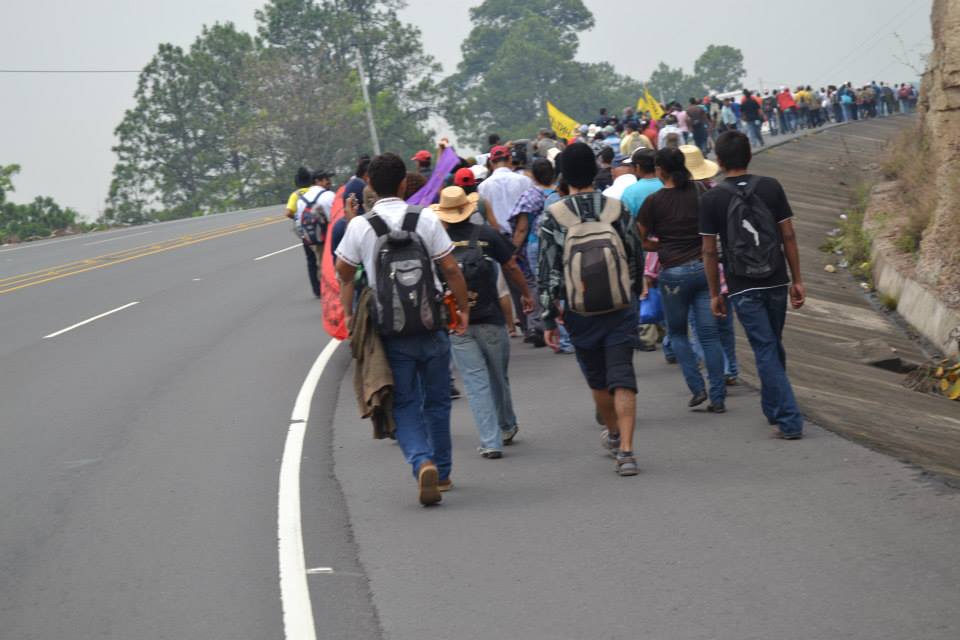
Durante un prolongado lapso el Día Internacional de lucha de los trabajadores fue eliminado del calendario cívico de Honduras y las masas populares no podían celebrarlo por impedírselo los regímenes reaccionarios, cuyo odio de clase estaba reflejado en un agudo despotismo. Ningún derecho para los trabajadores, sólo la obligación de producir beneficios para los monopolios norteamericanos y las oligarquías criollas, y hartarse de hambre y miseria bajo la bota de capataces, verdugos y cipayos. En Honduras floreció el neocolonialismo con la putrefacción creciente de los círculos entreguistas y traidores y su acción funesta continúa cada día con el baldón de la desvergüenza y anti patriotismo.
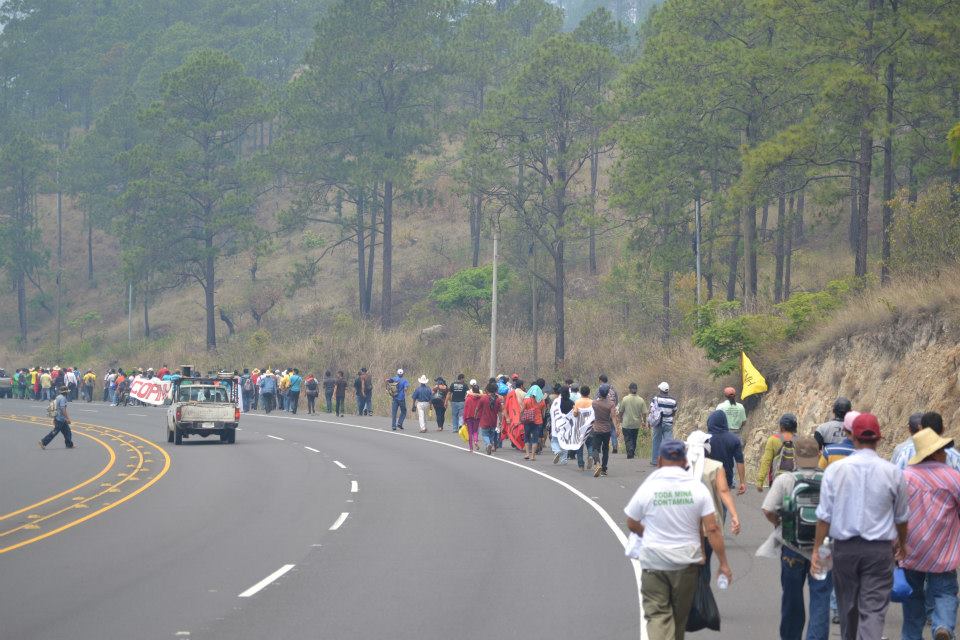
En aquellos años que muchos recordamos (y otros, recordándolos hacen todo lo posible para olvidarlos y para que las nuevas generaciones los ignoren), la reacción del poder, sirviendo a los monopolios yanquis, no permitía que los trabajadores intentaran organizar sus sindicatos y menos aún organizar su partido político que, ya en la década del 20 había funcionado por un corto período. No toleraba ninguna manifestación obrera y tampoco la celebración del lº de Mayo. Entonces los trabajadores e intelectuales democráticos más despiertos se planteaban la conquista de las más elementales libertades democráticas, entre ellas la de organización sindical, pues aun cuando Honduras pertenecía a la ONU y OEA y había firmado la Carta de los Derechos del Hombre, ninguno de esos derechos era disfrutado por el pueblo trabajador. A los elementos progresistas se les calificaba de “comunistas”, se les reprimía, encarcelaba y hasta deportaba a Guatemala y otros países.
Como la dictadura entonces la ejercía el Partido Nacionalista, se mantenía en la oposición el Partido Liberal, el rival histórico de aquél. Aun sin organización del PL, el pueblo trabajador que era el más golpeado por el régimen, le brindaba su apoyo decidido y tomaba la bandera liberal para luchar por sus reivindicaciones de clase que, al llevarse a la práctica, redundarían en beneficio de todo el pueblo. La lucha obrera que se libraba fundamentalmente en la costa norte con el proletariado agrícola (campeños) en la vanguardia, oscilaba entre dos tendencias. Por una parte era estimulada por los círculos de la burguesía, terratenientes y pequeña burguesía liberales, pero queriendo darle un carácter netamente anti-dictatorial (anti-cariísta, anti-galvista) desde las posiciones del caudillismo tradicional. Y por otra parte, intentaban castrarla de su esencia clasista, desviarla del carácter antimonopolista que era el punto vital para los trabajadores. Nos decían entonces los líderes liberales: “No toquemos a las compañías gringas porque es impolítico; mañana que estemos en el poder, les pondremos la mano como merecen”. Muchos lo aceptaban de buena fe. Otros dudábamos a pesar de nuestra poca politicidad e intuimos una engañifa, tal como la ha comprobado la historia.
Las luchas continuaron durante todas esas décadas de sombra con sus naturales características de flujo y reflujo, con la particularidad de que la clase obrera, los campesinos y demás trabajadores marchaban como apéndice o reserva sociopolítica de las clases altas parasitarias. La tendencia hacia una política independiente de los trabajadores se presentaba muy débil por la falta de cohesión, por el atraso cultural, por la enfermedad del caudillismo. Pero el pueblo hondureño nunca se rindió ni a la dictadura sanguinaria y brutal de los terratenientes feudales (Carias) ni a la demagogia y el palo de la burguesía burocrática (Gálvez). Algún día se ha de escribir esa historia.

¿Por qué el imperialismo propició un cambio en el gobierno de Honduras en la década del 40? ¿No era la camarilla de don Tiburcio lo suficientemente leal a sus compromisos con los monopolios?
Leal lo era y lo es hoy, aunque con cierto subjetivo resentimiento que, en determinados momentos, se presenta objetivo y hasta vociferante, pero es un resentimiento no por falta de fidelidad al amo yanqui sino por exceso. En verdad se puso un nuevo presidente en Honduras (1948) porque había terminado la II Guerra Mundial con el aplastamiento del fascismo por la coalición anti-hitleriana en la que el papel principal lo jugó la Unión Soviética. Se había ofrecido un “mundo nuevo” de libertades y bienestar, pero como él no aparecía en nuestros países, los pueblos se habían lanzado al derrumbe violento de las tantas dictaduras apadrinadas por la “buena vecindad”. En Honduras, nuestro pueblo también se había lanzado virilmente al asalto del bastión dictatorial desde Julio de 1944, cuando en Tegucigalpa y San Pedro Sula y otros lugares fueron derrotadas las fuerzas democráticas por las bayonetas despóticas respaldadas por la embajada norteamericana. Pero las luchas populares continuaron en esos años muy amenazadoras y peligrosas, por lo que el imperialismo optó por un aparente cambio. Elevó al Dr. Juan Manuel Gálvez, ministro de guerra en la dictadura y ex abogado de los monopolios bananeros, sustituyendo al general Tiburcio Carias.
Pero a más de eso anotado existió otra causa principal: ante las condiciones nuevas en que predominaba el espíritu de insurrección en las masas populares, la política dura de los terratenientes feudales resultaba ya, más bien, provocadora de la revolución. Por eso, los elementos más claros dentro del PN vieron la urgente necesidad de acudir a una nueva política, la de conciliación nacional. Era el pensamiento de la burguesía compradora y burocrática con el visto bueno del imperialismo. Bajo este régimen ocurrió un deslinde trascendente dentro del PN que más tarde llevaría a la escisión del partido. Ante la línea dura e inflexible de los terratenientes feudales surgió la tendencia “reformista” propugnando una política más de acuerdo a la realidad, una política que para la reacción burguesa y los monopolios era un paso adelante en el afianzamiento de su dominio porque podría aplacar las iras populares.
Más las luchas del pueblo no podían detenerse por la política de “contención y frenaje” de la “conciliación nacional”, porque las condiciones de explotación y miseria seguían iguales. No obstante, cambiaban también las formas de lucha de las masas oprimidas; se hacían menos violentas y para determinados sectores de la oposición, para la oligarquía liberal a la que el régimen necesitaba atraer, se dieron condiciones favorables para que llevasen la lucha al terreno pacífico. Se intentó, con éxito, desvanecer los anhelos de insurrección de los dirigentes liberales otorgándoles algunas concesiones y puestos burocráticos, pero en cambio se reprimía a los trabajadores en sus afanes antimonopolistas y se enderezó la ofensiva oficial contra el Partido Democrático Revolucionario Hondureño (PDRH) de reciente formación.
Este fue un nuevo partido que salió al terreno político elevando una bandera patriótica, de unidad nacional y claro antiimperialismo. Don Julián López Pineda, teórico del anticomunismo y vocero de los monopolios, en principio se había burlado del partido, bautizándolo con el apodo despectivo de “Los Veinte”. Más tarde, cuando el PDRH fue apoyado por sectores avanzados de la clase obrera y tuvo una destacada militancia de esclarecimiento político a las masas, resultó un serio dolor de cabeza para el régimen y ya entonces don Julián tuvo que lanzar a fondo su deslucida arma anticomunista contra el PDRH y el gobierno emplear los métodos de represión violenta. Así la “conciliación nacional” para los trabajadores y elementos progresistas no tenía más sentido práctico que el mismo que había tenido la dictadura anterior. Pero las luchas proletarias iban adoptando otras formas organizativas en la clandestinidad; el gobierno empujaba a los trabajadores a luchar en la sombra.
Al comenzar la década del 50 los obreros continuaban sin sindicatos legales y sin partido propio. Entonces el l° de Mayo comenzó a celebrarse en las condiciones más raras; escondidos en las plantaciones bananeras, en las playas del mar, en alguna aislada hacienda de amigo progresista, en locales cerrados donde se hacían mítines para conmemorar el día.
Las condiciones del pueblo se hacían angustiosas mientras los monopolios extranjeros remitían millones de dólares a EE.UU. y las oligarquías recibían su parte de la plusvalía distribuida por aquéllos. En esta época las compañías bananeras comenzaron a pagar el impuesto sobre la renta que venía a ser como el pago disimulado del soborno por el que se les otorgaran nuevas concesiones leoninas. La situación económica era bonancible pero cundía la miseria en la clase obrera, los campesinos y otras capas medias de la sociedad.

Related Posts with Thumbnails