

Statement by the Honduras Solidarity Network November 28, 2018
 Un año después - Un llamado a la solidaridad.
El régimen hondureño usa la violencia contra su gente; Estados Unidos usa la violencia contra los refugiados que huyen de Honduras.
English follows the Spanish
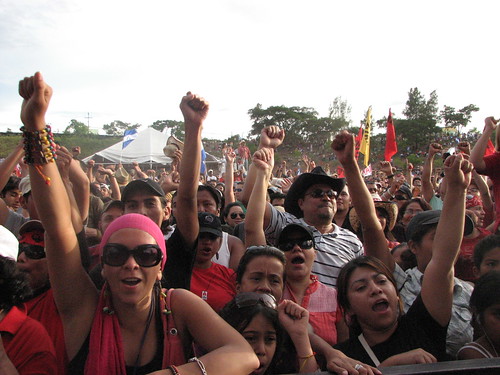
 El lunes 26 de noviembre de 2018, las autoridades hondureñas dispararon enormes cantidades de gases lacrimógenos y dispararon balas vivas en contra de una gran marcha de protesta en Tegucigalpa para conmemorar el primer aniversario del fraude electoral de noviembre de 2017. Al menos 3 personas resultaron heridas, una de ellas, Geovanni Sierra, trabajaba como reportero para UNE-TV cuando recibió un disparo. Esto sucedió un día después de que la Patrulla Fronteriza de los Estados Unidos disparara balas de goma y grandes cantidades de gas lacrimógeno -a través de la frontera hacia México- a la Caravana de Refugiados, la mayoría huyendo de Honduras, a quienes se les está impidiendo ingresar a los Estados Unidos. Sólo 2 días antes de este incidente, el hermano del presidente de hondureño de facto, Juan Orlando Hernández, fue arrestado en el aeropuerto de Miami por ser integrante del crimen organizado, con vínculos con el narcotráfico, en Honduras. Estos tres incidentes en 4 días son únicamente la punta del iceberg de la crisis de las políticas estadounidenses en Honduras y de un régimen dictatorial, con en su violencia y corrupción.
El 26 de noviembre de 2017, Honduras acudió a las urnas en una elección en la que se enfrentaron la derecha con el Partido Nacional y el presidente JOH a la cabeza (quien se postuló para la reelección de manera inconstitucional), y Alianza, una coalición entre el anti-golpista/resistente Partido LIBRE y miembros del Partido Anticorrupción. Estas elecciones, en vez de permitir a Honduras tomar un nuevo camino para restaurar la democracia y hacer que el país sea habitable para el pueblo, un flagrante fraude electoral, una nueva ola de represión, y la continua impunidad y corrupción sumieron al país en una crisis aún más profunda.
La crisis que comenzó con el golpe de estado de 2009 respaldado por los Estados Unidos, seguida de las elecciones de 2017 -también respaldadas por los Estados Unidos-, es más profunda y más amplia que nunca. Es esta crisis la que está expulsando a miles de hondureños de su país.
Mientras el pueblo hondureño continúa organizándose, nosotros respondemos con un llamado a la solidaridad para apoyar al pueblo que lucha por el cambio en Honduras y al pueblo que lucha por sobrevivir en el éxodo de refugiados.
Exigimos que los Estados Unidos y Canadá detengan todo apoyo al régimen hondureño. Apoyamos las demandas de libertad para todos los presos políticos y de justicia para todas las víctimas del régimen hechas por el pueblo Hondureño. Exigimos que los Estados Unidos detengan la represión contra los refugiados, que abra las fronteras a quienes están siendo expulsados de sus países, y que ponga fin a la militarización de la frontera y a la violencia contra todos los migrantes y refugiados.
28 de Noviembre 2018
Honduras Solidarity Network of North America


One year later - A Call to Solidarity
Honduran regime uses violence against its people - US uses violence against refugees fleeing Honduras.
On Monday, November 26, 2018, Honduran authorities fired massive amounts of tear gas and opened fire with live bullets on a large protest march in Tegucigalpa to mark the one year anniversary of the November 2017 election fraud. At least 3 people were wounded, one of them, Geovanni Sierra, was working as a reporter for UNE-TV when he was shot. This happened one day after the US Border Patrol shot rubber bullets and quantities of tear gas across the border into Mexico at the refugees, most fleeing from Honduras, who are being held back from entering the US. Only 2 days before that incident the brother of the defacto president of Honduras, Juan Orlando Hernandez was arrested at the Miami Airport for being part of the narcotics trafficking organized crime in Honduras. These three incidents in 4 days, are just the tip of the iceberg of the crisis of US policy, and a dictatorial regime and its violence and corruption.
On November 26, 2017, Honduras went to the polls in an election that was a face off between the right wing National Party sitting president JOH (who ran for reelection unconstitutionally) and the Alianza, an alliance between the anti-coup/resistance Party LIBRE and members of the Anti-Corruption Party. But, instead of the election allowing Honduras to take a new path to restore democracy and make the country livable for the people, blatant election fraud, a new wave of repression and continuing impunity and corruption plunged the country even deeper into crisis.
That crisis began with the US backed 2009 coup, and after the 2017 election (also supported by the US), it is deeper and broader than ever before. It is this crisis that is pushing thousands of Hondurans out of their country.
As the Honduran people continue organizing, we respond with a call for solidarity to support the people fighting for change in Honduras and to support the people fighting for survival in the refugee exodus.
We demand that the US and Canada stop all support for the Honduran regime. We support the Honduran people’s demand for freedom for all the political prisoners and for justice for all the victims of the regime. We demand that the US stop the repression against the refugees, open the borders to those being pushed out of their countries and end the militarization of the border and violence against all migrants and refugees.
November 28, 2018
Honduras Solidarity Network of North America