Showing posts with label agrarian reform. Show all posts

Friday, April 21, 2017

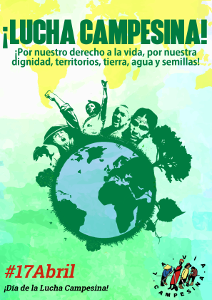
April 17th - International Day of Campesino Struggle From Honduras to Chicago - Fighting for land, food and justice.


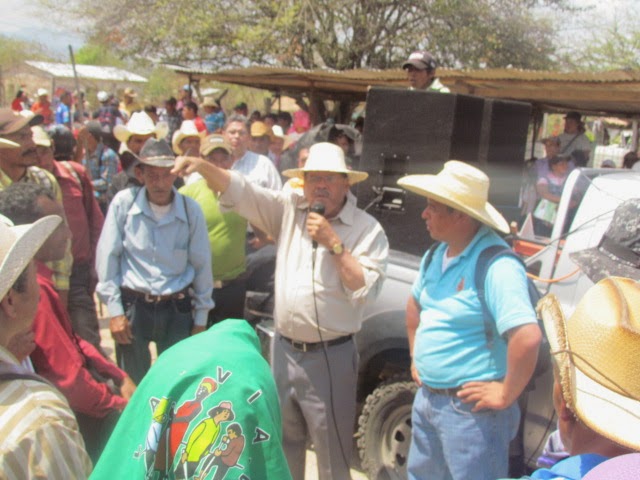
On April 17th campesino and all kinds of rural as well as urban land and water rights groups participate  in the International Day of Farmer and Peasant Struggle.  The April 17th date was chosen by the international organization Via Campesina in 1996 to commemorate the massacre of 19 Brazilian peasants organized in the MST (Movement of Landless Workers) in Eldorado dos Carajas , Brazil at the same time as the Via Campesina’s international assembly. This year once again there were activities around the globe including both Honduras and Chicago. A representative from La Voz de los de Abajo attended some of the events in Chicago. 
Article by V. Cervantes

Campesinos in Honduras  - Agrarian Reform Now and Stop Criminalizing Campesinos!

April 17,Tegucigalpa - foto L. Rivera, OnNoticias
In Honduras the campesino organizations that belong to Via Campesina, including the CNTC (National Center for Rural Workers), held a march and a one day occupation of the plaza at the Honduran Congress on April 17th. They are demanding agrarian reform and an end to the criminalization of the campesino movement.  For Honduran campesino and indigenous communities the fight for land, food, and water continues to be framed by violence, evictions, and displacement of their communities. Since the military coup of June 2009 more than 200 campesinos and campesinas have been murdered because of their participation in land struggles.  6,000 campesinos and campesinas have some type of criminal charges against them and are on probation, awaiting trials or in jail related to their activism. The protest condemned the fact that a week earlier, near the northern town of Las Lomitas, 5 members of an organized campesino community that has been on the land for 10 years were arrested and were still in jail as of April 17th. Campesino leaders are emphatic in their analysis that the only solution to violence in the countryside and the repression against the campesinos, as well as a way forward out of poverty in the countryside and food dependency, is an integral, equitable land reform that puts land and meaningful agrarian assistance in the hands of the campesinos. Three years ago the campesino movement in Honduras wrote a real land reform law and got it introduced into the Congress but it was then tabled and has disappeared from sight.   

Also on April 17th, Honduran government authorities accompanied by police arrived for “an inspection” of the embattled CNTC campesino community “9th de Julio” in the province of La Paz. This inspection was supposed to be a surprise and the authorities expected to find only a small number of campesinos on the land at that time. However, the CNTC discovered the inspection plan and the community was accompanied by a large number of other campesinos and supporters in La Paz. CNTC leaders stated that the inspection was part of ongoing intimidation and part of the strategy to displace the campesinos. Fabricio Velásquez, one of the leaders of the community was  interviewed by  Defensores En Linea and stated that the authorities were visibly startled to find so many campesinos and, although the campesinos did nothing to deter the inspection, the officials and police only stayed perhaps 15 minutes. The “9th of July” community is emblematic of the organized campesino struggle in Honduras — they have been evicted more than 26 times in 7 years, 3 times in just the past 12 months. Each time their houses and crops are destroyed, but they return to rebuild and replant, despite the fact that all of the leaders have  criminal charges made against them. La Voz de los de Abajo has visited “9 de Julio”  a number of times and there are several articles in Honduras Resists with more information about CNTC land recuperations. 

April 17th In Chicago: Farmers, Environmental Justice and International Solidarity 
April 17, Chicago, foto Family Farm Defenders

In Chicago, Via Campesina supporters and food sovereignty activists from Family Farm Defenders, Friends of the MST, and Food and Water Watch also held actions and educational forums on April 17th. There were actions at the Chicago Mercantile Exchange during the day to protest that institution's price setting that is driving small dairy farmers out of existence and another action at the offices of TIAA Financial Services against land grabbing pension fund speculation that hurts both small farmers and pensioners.

In the evening a representative from La Voz de los de Abajo attended the educational forums. Joel Greeno (Family Farm Defenders), Jessica Fujian (Food and Water Watch) and Amy Mall (Family Farm Defenders) spoke on food sovereignty and environmental justice, and Jeff Frank of the Friends of the Brazilian MST reported on the International Land Reform Conference held in Brazil in 2016.  He also gave an update on the wave of repression and criminalization of the MST since the 2016 coup against President Dilma Rousseff. Two MST members have been arrested, the MST school was attacked by the police and fighting for land reform is being treated as a criminal conspiracy. 

The speakers drew many connections between the farmers and peasant struggles in South America and Central America with the struggles in the United States including supporting the Native people’s fight to defend water and territories in the US and the No DAPL movement, and the struggles of urban and rural communities for environmental justice and healthy food.
They were familiar with the campesino and indigenous movements in Honduras through groups like Grassroots International and Agricultural Missions that along with La Voz de los de Abajo are members of the Honduras Solidarity Network, and they invited La Voz to given an update on the situation for the campesinos in Honduras and the campaign for support for justice for Berta Caceres, indigenous leader assassinated in 2016.

March 1, Tegucigalpa
foto V. Cervantes
This is one more example of the importance and the possibilities of building more mutual solidarity to confront the attacks on the peoples' movements in the world today. 


For More Information
www.viacampesina.org
www.defensoresenlinea.com
www.mstbrazil.org
www.foodandwaterwatch.org
www.familyfarmdefenders.org
www.foodandwaterwatch.org

Thursday, May 12, 2016

Violent evictions today and campaign against international observers


May 11
The Human Rights Observation Mission spent most of the day traveling from the Aguan Valley back to Tegucigalpa where there will be a public forum on Thursday to discuss the Mission’s finding but we received news of more repression and new government attacks on human rights defenders and journalists.  

This morning, in Tutule, La Paz two campesinos from the campesino group 9th of July (9 de Julio) community were wounded when 12 police vehicles and 80 soldiers carried out a violent eviction, using bulldozers to destroy houses, crops  of fifty families who have lived and worked on the land for 7 years. The security forces fired live ammunition wounding Johnny Alfredo Mejia Torres and Edwin Murillo. At the same time  5 patrol cars arrived at the home of Wilman Chávez, General Secretary of the La Paz region of the Central Nacional de los Trabajadores del Campo (CNTC) to arrest him. 

Franklin Almendares
photo from conexihon
The National General Secretary of the CNTC, Franklin Almendares reported to the media that the men, women and children of the community were forced to run and attempt to hide in the mountains from the troops. He also reported that this eviction is to benefit a local political power, Carlos Arriaga. In a phone interview with Franklin Almendares  this evening he said that the two wounded men received treatment and will recover and that there is a court hearing tomorrow morning for those who were arrested. He called for human rights organizations both national and international to accompany the community and their organization. 


In Tegucigalpa, the General Secretary for the Administration of the Government, Jorge Ramón Hernández Alcerro held a press conference where he condemned international observers and press for “inciting violence” referring to the protests this week by COPINH that were repressed by the police. He said that he was instructing the Honduran immigration service to identify foreigners who are participating in the protests or inciting violence. At least one international observer, Giulia Fellin who has been accompanying COPINH was harassed and interfered with as she tried to go to her embassy today. Another National Party politician claimed that foreign journalists are inciting violence, creating images and causing problems for the government. With this the government continues the campaign of defamation against human rights defenders, journalists and international solidarity and opens the door to more repression against those groups as well as inciting violence against them. 

Friday, October 16, 2015

Honduran Peoples' Movements Assembly


V. Cervantes October 12, 2015

Social movements; movements and communities in permanent resistance, and organizations with a vision of popular power built from below, met in a national assembly in early October in El Progreso. The  Social and Popular Movements Platform was formed two years ago with the goal of building unity among these movements to “retake the strategic political initiative” for a “national transformation”. 

The October 2015 assembly had representatives from more than 20 organizations, somewhat smaller than at their founding assembly. The meeting discussed the challenges they face from the new dictatorship represented by President Juan Orlando Hernandez, the general economic-political crises in the country, repression and criminalization of social protest, and the urgent need for unity by the social movements and groups that want fundamental change.  The assembly agreed on a communique that summarizes their goals, demands and their solidarity with others under attack by the current regime and power groups. The gathering also ratified the Platform’s commitment to “continue building popular power based on a citizens’ mobilization and a proposal to create the structural change that Honduran society wants; to build popular power  with a people’s communication media… and to continue working in an ethical, honest, respectful and fraternal manner to advance unity…..at the national and international level.”  


photo V. Cervantes
Social movements in Latin America refer to movements that represent certain sectors of society,  for example, campesinos, labor, indigenous peoples, or women. The social movement organizations and other groups active in the Platform include the organizations that formed the “Refoundational” trend in the FNRP and were opposed to the FNRP’s move into electoral politics with LIBRE, for example, COPINH, OFRANEH, and the Movimiento Amplio para Dignidad y Justicia (MADJ), as well as the Jesuit human rights, social research and communication group, ERIC-SJ/Radio Progreso.  The assembly also had the participation of important campesino organizations from the Bajo Aguan and regional centers of the CNTC that participate in LIBRE and the FNRP,  but also represent the campesino sector as a social movement. 

The campesino organizations spoke eloquently about the need for unity if they are to have a chance to survive the current attacks against them and win any space for their communities with an agrarian reform. The coordinator of OFRANEH, Mirian Mirando and of COPINH, Berta Caceres, spoke strongly about the attacks and challenges to their peoples’ continued existence as peoples and the difficult situation for their movements. Also participating in the meeting were human rights defenders, environmentalist community organizations, activists from poor people's movements (pobladores), the indignant (indignados) movement, unions, and popular movements from the Aguan. 

October 1
Photo Honduras Tierra Libre
There was thoughtful discussion at the assembly about the last two years and the challenges brought to the social movements by the rise of the Indignados (Indignant) movement.  There was an acknowledgement that as the Platform they had difficulty in developing a program or relationship related to the indignados. The indignado movement rose massively in the Spring of 2015, against corruption and impunity, and demanding an international, independent investigative commission (CICIH), after the blatant corruption of President Hernandez’s government and National Party in robbing more than 350 million dollars from the public health system was uncovered. However, there were several different orientations in that movement including people and groups from the resistance movement against the coup, people who were opposed to the coup but stayed outside the FNRP,  as well as people and groups that supported the coup in 2009 but were outraged by the corruption. The indignados movement as a mass response was analyzed to be fading out; it was noted that turn out for a national day of action on October 1st by the indignados closest to the FNRP and youth organization was very small numerically compared to earlier mobilizations and was boycotted by the more conservative sectors of the indignados. Despite being much smaller than before, there were highway takeovers and other actions in many parts of the country and in multiple neighborhoods of Tegucigalpa, all of which were repressed by military and police forces.  The assembly discussed concern on how to build unity with the people and groups that were activated by this indignation and who share the desire for structural change in Honduras. 
Repression - October 1
photo Honduras Tierra Libre


Another point of discussion was concern by many of the participants in the assembly was that once the electoral season opens again (next year), it will be even more difficult to mobilize for action in support of the social movements’ ongoing and permanent resistance because of the “electoral fever” generated by the media and the political parties. 

The PMSP reiterated its support and participation in the campaigns in defense of the defenders of the right to public education, the right to land, common-good resources, freedom of expression and women’s rights; called for justice for all the assassinated activists, condemned criminalization and repression against protest and social movements and declared the struggles of the Garifuna people as well as indigenous peoples in general to be the struggle of all the movements. 


Friday, October 9, 2015

War on Drugs? War on Campesinos

The country is buzzing about the arrest of Yankel Rosenthal in Miami for money laundering and the indictment  of Jaime and Yani Rosenthal from one of the most powerful families in Honduras. Karen Spring, the Honduras Coordinator for the Honduras Solidarity Network has a very thoughtful piece in her Aquí Abajo blog that that lays out both background and things to think about in this "war on drugs" run by Washington DC.  Talking about wars, I am publishing below an article from my visit on Wednesday with the campesino leaders in Progreso from the CNTC.


Conversation with Magdalena Morales & CNTC regional leaders - Progreso
Campesino Movement Still Fighting for Justice and Survival

Wednesday October 7th .
V. Cervantes

Magdalena 
The National Center for Rural Workers (CNTC) in the province of Yoro has 42 organized communities, each with several cooperative projects (campesino empresas).  Magdalena Morales is the general secretary and we were joined by Francisco, Julian and Bernabe, the other members of the regional secretariat. I was eager to get an update on one of their communities in Sulaco that, on August 18th,  was violently evicted from its land after 15 years. The community is named Hernando Figueroa and has been home to two former national General Secretaries of the CNTC.
Sulaco eviction

At least 200 police and military, accompanied by the government Human Rights Commission, arrived at the community with 12 patrol cars, an ambulance, firemen and armored vehicle. No eviction order was shown, but the troops destroyed 20 homes, an evangelical church and about 350 acres of beans, corn and other food crops which represented all the community's cultivation.  Only the intervention by phone of a regional official from the government's Agrarian Institute stopped the violence before the Catholic church and preschool and water purification system were destroyed.

Magdalena said that the government of Juan Orlando Hernandez seems to have new protocols for violence in evictions: using quantities of tear gas, sending in ambulances, firemen and armored vehicles with larger numbers of both military and police troops---as if they were going to war. The group talked about the recent attacks on settlements in Choluteca and Villanueva as examples of how far the government is willing to go in making poor people homeless. Those attacks were documented by social and traditional media so that the whole country could see them, most evictions are not shown on television.

The group also talked about the ongoing intimidations against campesino leaders. In Progreso there was an intense campaign against the CNTC, especially Magdalena during the recuperation of land claimed by the ASUNOSA corporation (part of SAB Miller's operations). Magdalena was criminally charged and all the leadership was threatened. The case against Magdalena was finally negotiated but there remain threats and intimidations, such as surveillance of the leaders' movements. The group felt, in general, that the Hernandez government has unleashed a new campaign against campesino organizations and communities with threats, evictions and the criminalization of the campesino social movement. They said that one of the key fights for the agrarian movement is to fight this criminalization and intimidation.

Julian, Francisco, Bernabe
Francisco explained that his community, 6 de April,  is also under threat of eviction after more than 11 years on their land. They were being titled under President Zelaya's decree (18-2008), which was aimed at resolving hundreds of long-standing agrarian conflicts in favor of the campesinos living and working on recuperated land. After the coup, the decree was annulled and, in the case of 6 de April, a big landowner claimed the land, first demanding payment from the Agrarian Institute and when that was denied moving to the courts to claim title to the land. The campesinos have now been told by the Agrarian Institute that they need to get a lawyer to defend their title, but they do not have the resources to hire private representation. Juan Orlando Hernandez has slashed the budget and and functions of the Agrarian Institute in the past few years so that it no longer provides the same legal and advisory services to the campesinos that it once did.

Magdalena with poster
for Credi-Mujer Law
In the middle of this discussion a reporter and cameraman from the television station, TV Progreso arrived to interview Magdalena about a recent success for the campesino movement, the passage of the Credi-Mujer law in Congress. This law is aimed at increasing gender equity so that poor women and campesinas in the rural areas can get access to credit and other economic assistance. Magdalena talked about the importance of this access in a country with a high percentage of women headed households and single mothers who are struggling to survive. After the reporter left she told me that there are some people who don't feel this small victory is important but that she and other women leaders believe that it will not only help women directly but indirectly will increase access to other services and assistance for poor women in the countryside.

Magdalena began talking about the determination of the organized campesino movement to begin the fight again for Congress to pass their project, the Law for Integral Agrarian Reform with Gender Equity.  She said that they had not been able to win in Congress over the past two years but are gearing up to fight again because only with a just agrarian reform will it be possible to begin to address the extreme poverty and the agrarian conflicts and violence against communities  in the countryside.

Margarita Murillo
Another important campaign that Magdalena said they want to take up is an independent investigation of the assassination of Margarita Murillo, a campesina leader and member of the resistance, killed on August 26, 2014, in nearby Villanueva while working on her parcel of land.

Margarita was a founding member of an early campesino organization, the FENACAMH (National Unity Campesino Front) and of the CNTC. She was kidnaped and tortured during the repressive period of the 1980's and had to go into hiding. She returned and after the coup became active in the resistance. At the time of her murder she had protective measures ordered by the Interamerican Human Rights Commission but, as is usual,  the Honduran government had not complied with requirements to provide protection. Magdalena said that there is a real need for an independent investigation to find out the facts because otherwise there will not be a serious attempt to know what happened.


Monday, August 10, 2015

!Todos Somos Indignados - We Are All Indignant!


On July 31st, Honduran indignad@s which included members of the political opposition, indigenous activists, human rights defenders, students ended their hunger strike which was begun in June to protest the massive corruption and attacks on the political and economic well-being of the Honduran people (see the Honduras Solidarity Network statement below). The massive torchlight marches of thousands of Hondurans are continuing and the people continue to demand President Juan Orlando Hernandez's resignation and prosecution of all those responsible for the corruption. The marches also continue to denounce the attacks on the students, campesinos, indigenous and working people in general and the political repression. This is a time when the movement is re-accessing their tactics and possibilities for winning change. We will be publishing more analysis and information in upcoming posts. 

On July 27th the campesino movement supported by human rights defenders, social movements and LIBRE blocked highways around the country demanding agrarian reform (see article by Charity Crouse below). 
Chabelo and his mother leaving
 the prison in Ceiba
Photo via Dunia Aracely Pérez

On July 24th campesino political prisoner, Jose Isabel "Chabelo" Morales Lopez was released from prison pending another re-trial after his conviction was overturned. He has served almost 7 years in prison. His trial (the third trial!) ia currently scheduled for September 28 and La Voz de los de Abajo joins in the call for support for his permanent freedom. Pressure from international and Honduran human rights and social justice movements was crucial in winning his freedom and will be crucial for his definitive liberty. 

Please sign the petition HEREHere
More information Here

:::::::::::::::::::::::::::::::::::::::::::::::::::::::::::::::::::::::::::::::::::::::::::::::::::::::::::::::::::::
Which Direction for Honduras
By Charity Crouse

Photo by Duñia Montoya via Bartolo Fuentes
On July 27, 2015 Hondurans Central Nacional de Trabajadores del Campo (CNTC),  Frente Nacional de Resistencia Popular (FNRP), organizations comprising Via Campesino, and maquila workers from the village near Progreso blocked the highway between  Tela and San Pedro Sula for four hours to compel the Honduran National Congress to address the myriad issues confronting campesino communities. These issues include the recent revelation of corruption by former Congress leader and current president Juan Orlando Hernandez of siphoning off millions of dollars from the Instituto Hondureno de Seguridad Social (IHSS) to fund his presidential campaign. This action corresponds to those for the last eight weeks by the movement which calls itself Indignados but it also includes long-standing policies of criminalizing land reform activists and targeting communities that tend the land. Currently, more than 5,000 face charges related to the land struggle while many more fight for recognition of land titles awarded since 2008. Farmers and their families are routinely evicted, imprisoned and have even been murdered as land rights are destroyed by the imposition of mining and other resource acquisition interests. Additionally, many of those with corporate and monied oligarchical family ties collude to dispossess entire communities of families of their sovereignty and their means of survival.

In 1962, sweeping land reform measures were passed in Honduras as part of the movement of farmers (campesinos) and indigenous people that united with workers throughout Latin America. These reforms enable communities that work land that was not specifically privately owned to be legally turned over to campesinos for future development. Little land was privately owned at the time and campesino communities and organizations grew throughout Honduras. The Instituto Nacional de Agricultura (INA) was established as an administrative body to coordinate land use practices and designations.

Throughout the 1980s, campesino communities and other leftist activists experienced extensive repression by right-wing governments dominated by an oligarchy who were the primary private landowners in the country and who controlled the private industry along with international companies like Standard Fruit. The U.S. military intervention in Central America in the 1980s basically occupied Honduras and supported the local oligarchy by training and supporting the Honduran troops and death squads that often tortured, disappeared and assassinated resistance leaders and members at their behest. Many of those oligarchs thrived by concentrating wealth and land usage through the proliferation of neoliberal free trade agreements like North American Free Trade Agreement (NAFTA). While the development of industry offered job opportunities to many poor Hondurans, the agricultural and cultural base of the nation was dramatically altered as social movements that fought for human rights and economic and social justice were further repressed. Hundreds of human and environmental rights activists were assassinated. 

For those working for the rights of the land and those who sustained it, this repression was codified in law with the passage of the Law of the Modernization of Agriculture in 1993. The Law of Modernization expanded the entrenchment and entitlement of private landowners and industrialists. In addition, the role of INA in mediating land usage issues was turned over to a newly-formed Council of Land and Property, which now regulates land registries and titles. 

The impact has been debilitating for campesino communities. The proliferation of mining and hydroelectric interests that are often owned by foreign companies and officially incorporated and registered on property claimed by the oligarchy has increased to now encompass 35 percent of the public land of Honduras. That means that 35 percent of land once guaranteed to campesino communities has now been absorbed into the nexus of private landowner/corporate control. These concessions along with consolidation of agro and other business interests often operating under similar circumstances as the mines and dams, have corresponded with the increased militarization and expansion of the private security apparatus that forces campesino communities off their lands. Further militarization and security encroachments are often justified under the guise of fighting the War on Drugs, even as the government is implicated in collusion with the proliferation of the narco-traffickers, as revealed in a cable from the former U.S. Ambassador to Honduras leaked by Wikileaks. In practice, though, this security regime functions to safeguard private interests at the expense of entire communities. One more publicized and notable example is the ongoing struggle of the communities in the Aguan Valley that were violently repressed by the now-deceased Miguel Facusse.

Proceedings for campesino communities to assert their land rights are expensive, cumbersome, time-consuming and fraught with bureaucratic fraud. The arrests and prosecutions of campesinos takes time and resources away from the mostly impoverished communities.

CNTC campesinos detained in La Paz July 2015
Photo Franklin Almendares
In April of 2014, the CNTC and other land reform activists proposed the Law of Integrated Agrarian Reform. The law seeks to dismantle the regressive provisions of the Law of Modernization and restore autonomy and legal security to the campesino communities of Honduras. Unfortunately, while the National Congress and its leaders were busy defrauding the Honduran people and dismantling their public systems, the bill languished in the Committee for Agricultural and Rural Development without being read. The status quo of mismanagement, bureaucratic corruption, collusion between the oligarchy and predatory foreign interests, and the divestment of Honduran wealth and resources that characterizes the current imbroglio over the IHSS has also played out in the land and agricultural policies. Not only has the health of the Honduran people been devastated by this disaster, but so too has the earth that provides the economic system that sustains the entirety of the nation.

As such, Hondurans together put their bodies on the line to stop not only the police and government, but also the whole system that divests Honduras of its health and wealth. As the momentum continues to build, let us take inspiration to act as we see communities merge into Honduras’ future direction, a direction that holds great lessons and promise for the future of the world. 

:::::::::::::::::::::::::::::::::::::::::::::::::::::::::::::::::::::::::::::::::::::::::::::::::::::::::::::::::::
 El español sigue el ingles

July 30 2015
Statement from the Honduras Solidarity Network  of North America

Honduran people demand an end to corruption,  impunity, and militarization


As members of The Honduras Solidarity Network (HSN) of North America, we declare our solidarity with the many thousands of Hondurans who have been protesting for months with vigils, marches with torches, and an ongoing hunger strike. We support their demands for the resignation of President Juan Orlando Hernandez; the installation of an international independent commission (CICIH), to investigate the government corruption after the massive theft of hundreds of millions of dollars from the Honduran Social Security Institute (IHSS) by the ruling National Party; and a thorough investigation into the more than 3000 deaths in the health system during this crisis. This is a peoples’ movement in which the political opposition, the social movements, and the majority of the society are confronting obstacles to a better future for their country. 

We recognize that this outrageous and extraordinary corruption is one more example of actions outside the law, and against all the democratic principles committed by the Honduran political and economic elite, supported by the US government, which began with the 2009 military coup, and has continued with the subsequent coup governments. The most recent corruption scandal comes after 6 years of attacks against human rights defenders, agrarian and indigenous activists, and the entire political and social opposition movement. It comes as part of an attempt to consolidate illegitimate power that includes the removal of more independent Supreme Court justices in 2012 when the current president was the head of Congress and the subsequent decision, after Hernandez came to power in 2014, by the new court to declare null and void the anti-reelection clause of the Honduran constitution.

We strongly condemn the fact that the US Government’s support for the regime in Honduras continues. In fact as corruption was devastating the public health system, creating conditions in which thousands of people died; as the Honduran people and a diverse political opposition united their voices demanding President Hernandez’s resignation, the US Ambassador announced, “Our relationship (with the Honduran government) has never been better”. We are deeply concerned that the very few statements/actions by the US government about impunity and corruption, such as the agreement brokered between Transparency International, Association for a More Just Society, and the Honduran government,  are aimed at  whitewashing the crimes of the Honduran regime with token investigations and the possible prosecution of a handful of officials in order to gain support in the US for the so called “Alliance for Prosperity” — the $1-billion dollar package proposed for the countries of the Northern Triangle under the Biden Plan in the U.S. Congress. The rise of the recent movement against corruption is a demonstration of the failure of the existing agreement.  

We reject the common agenda the United States government  shares with international corporations, the IMF and the Honduran oligarchy represented by Juan Orlando Hernandez.   That agenda is an aggressive neoliberal program to privatize education, health care, and infrastructure while putting the country’s land and resources in the hands of foreign mining companies, hydroelectric, and mega-touristic projects, and powerful agribusiness interests.  This agenda is backed up by the US economic and military power. As if to make clear its support for the regime the US recently sent another group of 300 Marines to Honduras and conducted military helicopter exercises even as the corruption scandal was being revealed. 

We stand in solidarity also with the call from the indigenous, campesino, and trade union organizations, and other social sectors for solutions to the labor, agrarian, and territorial crises that affect their vulnerable members and communities. We are outraged and concerned about the criminalization of their movements and the ongoing violence against them which is the responsibility of the Honduran State. 

We are profoundly concerned with the continuing attacks on, and obstruction of the work of human rights defenders and journalists, without whom the population is totally defenseless against impunity and corruption. 

We support the demands of the Honduran people and we demand that the US government stop supporting militarization and impunity in Honduras now: 

1. That President Obama and the US Congress immediately stop military and police training, and military aid to Honduras!

2. That the US Congress not pass or fund the Alliance for Prosperity or other taxpayer-funded schemes that further militarize governments and increase human rights violations. 

3. That the US Embassy stop lending verbal and material support to the illegitimate government of President Juan Orlando Hernandez and instead demand of his administration an end to impunity and criminalization of human rights defenders and social movement leaders.   

4. We continue to demand an investigation for all of the assassinations committed in Honduras since the military coup of 2009, and punishment for the both the intellectual and material authors of those crimes.

July 30, 2015
Honduras Solidarity Network USA/Canada
D19/FNRP-Partido, LIBRE—EE.UU-Canadá
*****************

Declaración de la Red de Solidaridad de Honduras EEUU/Canada
30 de Julio 2015

La declaración que sigue fue presentada a funcionarios en la embajada norteamericana en Tegucigalpa el dia 31 de Julio por una delegación de la HSN dirigida por Alliance for Global Justice. El proposito era de expresar bien nuestra posición en solidaridad con el pueblo de Honduras y nuestra inconformidad con la política de los EEUU en Honduras. 

El Pueblo hondureño exige un alto a la corrupción, a la impunidad, y a la militarización

30 de Julio, 2015

Reconocemos que esta intolerable y como miembros de la Red de Solidaridad norteamericana con Honduras (HSN por sus siglas en inglés), nosotros declaramos nuestra solidaridad con los muchos miles de hondureños que han estado protestando por varios meses con vigilias, marchas con antorchas, y con una huelga de hambre indefinida. Apoyamos las exigencias de la renuncia del Presidente Juan Orlando Hernández por parte del pueblo; y la creación de una Comisión Internacional Independiente que investigue la corrupción gubernamental después del masivo y descarado robo de cientos de millones de dólares de los fondos del Instituto Hondureño de Seguridad Social (IHSS) que fueron usados para financiar la campaña presidencial del Partido Nacional actualmente en el poder; y también una profunda investigación de los casos de más de 3000 personas beneficiarias de este sistema de salud que murieron durante esta crisis. Este es un movimiento del pueblo en el cual los grupos de la oposición política, los movimientos populares y la mayoría de la sociedad hondureña está enfrentando muchos obstáculos para lograr un futuro mejor para su país.
carada corrupción es un ejemplo más de las acciones fuera de la ley, y contra los principios democráticos encabezados por la élite política y económica de Honduras, apoyada por el Gobierno de los Estados Unidos que se inició con el golpe militar del 2009, y ha continuado con los subsecuentes gobiernos golpistas. El escándalo más reciente de corrupción se da después de 6 años de ataques permanentes contra los defensores de los derechos humanos, contra los indígenas y trabajadores del campo, y contra todo el movimiento politico y social de oposición. Todo esto surge como parte del intento de consolidarse como un poder ilegítimo quebrantando la actual Constitución para lograr la reelección.  Este proceso se inició con el despido injustificado de varios magistrados independientes de la Corte Suprema de Justicia en el 2012 cuando el actual presidente era el líder del Congreso Nacional, y la subsecuente decisión, después que Hernández por medio de un fraude electoral se convirtiera en el presidente de Honduras en el 2014. La actual corte suprema de justicia  actuando fuera de la ley, invalidó y declaró nula la cláusula de la anti-reelección de la constitución hondureña.

Con mucha firmeza condenamos el hecho de que el apoyo al régimen de Honduras por parte del gobierno de los Estados Unidos continúa. Es más, mientras la corrupción devastaba el sistema público de salud, lo que creó las condiciones por las que muchos miles de personas murieron; mientras el pueblo hondureño y una diversidad política de oposición unían sus voces exigiendo la renuncia del Presidente Juan Orlando Hernández, el embajador de Estados Unidos anunció: “Nuestra relación con el gobierno de Honduras nunca ha estado mejor”

Estamos profundamente preocupados por las declaraciones/acciones por parte del gobierno de los Estados Unidos acerca de la impunidad y la corrupción, como el caso de la ruptura del tratado entre Transparencia Internacional, la Asociación por una Sociedad más justa, y el gobierno de Honduras, están dirigidos a encubrir los crímenes del régimen hondureño con investigaciones de fachada y el posible juzgamiento de unos pocos oficiales para ganar apoyo en los Estados Unidos para el programa denominado “Alianza para la Prosperidad” - El paquete de un billón de dólares propuesto para apoyar los Países del Triángulo Norte como parte del Plan presentado por el  vicepresidente Biden ante el Congreso de los Estados Unidos. El incremento del movimiento de protesta contra la corrupción es una muestra de que la existencia del presente acuerdo ha fallado.

Repudiamos la agenda común que el gobierno de los Estados Unidos comparte con corporaciones internacionales como el Fondo Monetario Internacional y la oligarquía hondureña representada por Juan Orlando Hernández. Esa agenda obedece a un programa neoliberal agresivo que busca privatizar la educación, la salud y la infraestructura mientras ponen la tierra del país y los recursos naturales en manos de compañías mineras extranjeras, así como los proyectos hidroeléctricos y los proyectos Mega-Turísticos y los poderosos intereses de la agro industria. Esta agenda es respaldada por la economía estadounidense y el poder militar. Para demostrar su apoyo al régimen de Juan Orlando, el gobierno de los Estados Unidos recientemente envió 300 Marines más a Honduras y han realizado maniobras militares usando helicópteros incluso, a pesar de que el escándalo de la corrupción ya había sido revelado.

Estamos en solidaridad también con el llamado de la población indígena, los campesinos, las organizaciones obreras y sindicales, y con otros sectores sociales que buscan soluciones sindicales, agrarias, y a la crisis territorial que afecta a los miembros y comunidades más vulnerables. Estamos muy indignados y preocupados acerca de la criminalización contra sus organizaciones y la continua violencia contra ellos con la responsabilidad directa del Estado Hondureño.

Estamos profundamente preocupados por los contínuos ataques a y la obstrucción del trabajo que realizan los defensores de derechos humanos y los periodistas, sin el trabajo de estos organismos la población estaría totalmente desprotegida contra la impunidad y la corrupción.

Apoyamos las exigencias del pueblo hondureño, y demandamos que el gobierno de los Estados Unidos suspenda la ayuda militar y la impunidad ahora! Exigimos que:

1. Que el Presidente Obama y el Congreso de los Estados Unidos suspendan inmediatamente los entrenamientos militares y policía, así como la ayuda militar a Honduras!

2. Que el Congreso de los Estados Unidos no apruebe el Fondo de la Alianza para la prosperidad u otros planes o proyectos financiados con nuestros impuestos, y que sólo sirven para militarizar más a los gobiernos y el aumento de las violaciones a los derechos humanos.

3. Que la Embajada de los Estados Unidos no siga brindando apoyo verbal y material al gobierno ilegítimo de Juan Orlando Hernández y que en cambio se le exija que ponga término a la impunidad y la criminalización contra los defensores de los derechos humanos y de los líderes del movimiento social.

4. Continuamos exigiendo una investigación exhaustiva de todos los asesinatos cometidos en Honduras desde el golpe de estado del 2009, y exigimos castigo para los autores materiales e intelectuales de estos crímenes.

30 de Julio
Honduras Solidarity Network USA/Canada 
Red de Solidaridad con Honduras, EEUU/Canada

Tuesday, March 24, 2015

Campesinos Protest Against Criminalization

El original declaración en español sigue el ingles
Declaration and photos from Vía Campesina Honduras
"Immediate liberty for the arrested campesinas & campesinos
More than 5 thousand in all of Honduras

Declaration on the wave of criminalization against the campesinos and campesinas of La Paz, Honduras

March 23, 2015,  Vía Campesina Honduras

Campesinos and campesinas, members of the National Center of Rural Workers (CNTC) accompanied by Vía Campesina carried out a march on Monday through the main streets in the province of La Paz as pressure to demand that the government end the violence against the campesinos. 

The countryside has stopped being an important sector for governments since the neoliberal system defines its plan for development based on the industry of agro-exportation, the financial system, mining, tourism, sweat-shops maquiladores and other things and agriculture is left abandoned. 

The agrarian and alimentation crisis is a true human tragedy, the situation in the countryside worsens day after day due to the lack of a true legal framework (to protect it). 

In order to resolve the agrarian problem and guarentee support to the small farming sector of the country, last April 9 the Law for an Integral Agrarian Reform with Gender Equity for Food Sovereignty and Rural Development, was introduced (to the Congress); it has remained tabled by the legislature. 

The campesino movement continues to be repressed on the land, our fields are destroyed, we are beaten, they burn our houses; from 2014 to the present 15 campesino groups in different municipalities, belonging to the CNTC have suffered violent evictions and another 34 evictions have been announced to take place soon. 

As of this moment around 5 thousand campesinos and campesinas at the national level have legal charges against them and more than 700 are women. Just in La Paz of 48 campesino groups 46 of the groups are in legal processes; we have more than 500 people with probationary measures, 161 are women and there are 10 comrades in prison condemned to more than 6 years. They are: 
1. Omar MejíaGálea (10 de Enero 2014) Grupo Buena Vista, la brea Comayagua
2. Benancio  Palomo Chavarría (10 de enero 2014) Grupo Buena Vista, la brea Comayagua
3. Gerson Edgardo Hernández (10 de Enero 2014) Grupo Buena Vista, la brea Comayagua
4. Héctor David GáleasLópez (11 de Octubre 2013) Grupo 18 de Abril la Pollera, Quilaperque, La Paz
5. Nery Antonio Gonzales (11 de Octubre 2013) Grupo 18 de Abril la Pollera, Quilaperque, La Paz
6.Ángel Arnaldo Martínez Marquez (11 de Octubre 2013) Grupo 18 de Abril la Pollera, Quilaperque, La Paz
7. Manuel Nicolas Dominguez (11 de Octubre 2013) Grupo 18 de Abril la Pollera, Quilaperque, La Paz
8. José David Aguilar Gáleas (11 de Octubre 2013) Grupo 18 de Abril la Pollera, Quilaperque, La Paz
9. Jacinto Bardales 11 de Octubre 2013) Grupo 18 de Abril la Pollera, Quilaperque, La Paz
10. Osmar Lara, Grupo Campesino Unidos para un Futuro Mejor, Marcala, La Paz

Rafael Alegria and Franklin Almendarez
During the protest by the campesino movement the General Secretary of the CNTC, Franklin Almendarez denounced the political persecution aimed at the local group leaders and campesino leaders in La Paz, "our compañeros are followed in public places and public transportation by the police authorities and people dressed as civilians, we also want to sound the alert to the fact of the confabulation of the National Police with the big landowners to facilitate armed civilians executing evictions and persecuting the campesino groups" he stated. 

"In the same way, we vigorously denounce that government institutions such as the Institute for Forest Conservation (ICF) and the National Agrarian Institute (INA) deny us the right to Agrarian Reform, dismisses as "without cause" the filings for titles to the land made by our compañeros, denying them access to natural resources and violating Accord 169 signed and ratified by the Government of Honduras with the International Labor Organization (OIT). The peoples affected must have the right to decide their own priorities regarding the process of development to the extent that this affects their lives, beliefs, institutions and spiritual well being and the lands that they occupy or use in some way, and (the right) to control to the degree possible their own economic, social and cultural development. (Accord 169, Article 7(1). "

For his part, the General Coordinator of Vía Campesina Honduras, Rafael Alegría stated that, "this march has been organized in La Paz to demand that the government end the criminalization of the campesino movement, we want this day to make history and its voice reach the government to say that we need them to give us land so that the campesinos have a parcel of land to work, that the Law for an Integral Agrarian reform with Gender Equity for Food Sovereignty and Rural Development that is tabled in the congress be passed immediately; the immediate liberation of the campesinos in legal proceedings and of the 11 compañeros imprisoned in Tamara and Marcala; and an immediate end to the violent evictions and the destruction of crops", he concluded. 

​The march arrived to the court building in La Paz where campesinos Blanca Rodríguez Manueles, Rómulo Gáleas and Antonio Gonzales had court hearings for allegedly stealing land, they were accompanied by the Coordinator of Vía Campesina, Rafael Alegría and the General Secretary of the CNTC, Franklin Almendarez; they achieved the campesinos being freed pending the continuation of the investigation. 

Afterwards the march went to the prison in La Paz where family members accompanied by congressmen from the LIBRE Party Rafael Alegría and Wilfredo Paz and Franklin Almendarez,  visited the 5 young campesinos who are incarcerated there. 


ANTE LA OLA DE CRIMINALIZACION CONTRA LOS CAMPESINOS Y CAMPESINAS DE LA PAZ, HONDURAS


La Vía Campesina Honduras 23 de Marzo del 2015. Campesinas y campesinos miembros de la Central Nacional de Trabajadores del Campo (CNTC) con el acompañamiento de La Vía Campesina, realizaron este lunes una caminata en las principales calles del departamento de La Paz, como medida de presión para exigir al gobierno el cese de la violencia en contra de los labriegos.
El campo dejo de ser un sector importante para los gobiernos, pues el sistema neoliberal definió un plan de desarrollo encaminado a fortalecer la industria de agroexportación, el sistema financiero, la minería, el turismo, la maquila, entre otros y la agricultura quedo en el absoluto abandono.

La crisis agraria y alimentaria es una verdadera tragedia humana, la situación en el campo se ha venido agravando día a día, producto de la falta de un verdadero marco jurídico.
Para solventar la problemática agraria y garantizar el apoyo al sector campesino del país, se introdujo el pasado 9 de Abril la Ley de Reforma Agraria Integral con Equidad de Género para la Soberanía Alimentaria y el Desarrollo Rural, misma que se mantiene engavetada en el legislativo.

El movimiento campesino, continua siendo reprimido por la tierra, nos deshacen nuestras milpas, nos golpean, nos queman nuestras casas, entre el año 2014 a la fecha 15 grupos campesinos pertenecientes a diferentes municipios de La Paz miembros de la Central Nacional de Trabajadores del Campo (CNTC),han sufrido desalojos violentos y para los próximos días se anuncian 34  desalojos mas .

Hasta el momento se encuentran con procesos legales alrededor de 5 mil campesinos y campesinas, de ellos más de 700 son mujeresa nivel nacional, solo aquí en el departamento de La Paz, de 48 grupos campesinos, 46 de ellos tienen  procesos legales,  tenemos más de 500 personas con medidas sustitutivas, 161 son mujeres y 10 compañeros guardan prisión, condenados a  mas de 6 años de cárcel, los compañeros son:
1. Omar MejíaGálea (10 de Enero 2014) Grupo Buena Vista, la Brea Comayagua
2. Benancio  Palomo Chavarría (10 de enero 2014) Grupo Buena Vista, la brea Comayagua
3. Gerson Edgardo Hernández (10 de Enero 2014) Grupo Buena Vista, la brea Comayagua
4. Héctor David GáleasLópez (11 de Octubre 2013) Grupo 18 de Abril la Pollera, Quilaperque, La Paz
5. Nery Antonio Gonzales (11 de Octubre 2013) Grupo 18 de Abril la Pollera, Quilaperque, La Paz
6.Ángel Arnaldo Martínez Marquez (11 de Octubre 2013) Grupo 18 de Abril la Pollera, Quilaperque, La Paz
7. Manuel Nicolas Dominguez (11 de Octubre 2013) Grupo 18 de Abril la Pollera, Quilaperque, La Paz
8. José David Aguilar Gáleas (11 de Octubre 2013) Grupo 18 de Abril la Pollera, Quilaperque, La Paz
9. Jacinto Bardales 11 de Octubre 2013) Grupo 18 de Abril la Pollera, Quilaperque, La Paz
10. Osmar Lara, Grupo Campesino Unidos para un Futuro Mejor, Marcala, La Paz

Durante la manifestación del movimiento campesino el Secretario General de la CNTC Franklin Almendarez denunció la persecución política de que son objeto los líderes de base y dirigentes campesinos en el departamento de La Paz, “nuestros compañeros son perseguidos en lugares públicos y en los medios de transporte, por las autoridades de la policía y personas que andan de civil, también alertamos la confabulación de la policía nacional con los terratenientes para avalar que personas civiles armadas ejecuten desalojos y persecución a los grupos campesinos” expreso.

“De igual manera lamentamos enérgicamente que instituciones del estado como el Instituto de Conservación Forestal (ICF) y el Instituto Nacional Agrario (INA) nos nieguen el derecho a la Reforma Agraria, declarando sin lugar los expedientes de titulación de tierras de los compañeros, negándoles el acceso a los recursos naturales y violentando lo acordado en el Convenio 169, firmado y ratificado por el Estado de Honduras con la Organización Internacional del Trabajo (OIT).

Los pueblos interesados deberán tener el derecho de decidir sus propias prioridades en lo que atañe al proceso de desarrollo, en la medida en que éste afecte a sus vidas, creencias, instituciones y bienestar espiritual y a las tierras que ocupan o utilizan de alguna manera, y de controlar, en la medida de lo posible, su propio desarrollo económico, social y cultural. Convenio 169, Artículo 7(1).


Por su parte el Coordinador General de La Vía Campesina Honduras Rafael Alegría dijo que, “esta caminata se ha organizado en La Paz para reclamar al gobierno un cese a la criminalización del movimiento campesino, queremos que este día se haga historia y llegue  la voz al Estado de que necesitamos que nos den tierras  para que el campesinado tenga una parcela para trabajar, que se apruebe de inmediato la Ley de Reforma Agraria Integral con Equidad de Género para la Soberanía Alimentaria y el Desarrollo Rural, que se mantiene engavetada en el Congreso Nacional, la liberación inmediata de las y los campesinos con procesos legales y los 11 compañeros que guardan prisión en los centros penales de Tamara y Márcala y un alto a los desalojos violentos y la destrucción de los cultivos”, concluyó.

Los manifestantes llegaron hasta los Juzgados de La Paz, donde se realizaría la audiencia de imputado a Blanca Rodríguez Manueles, Rómulo Gáleas y Antonio Gonzales, por supuesta usurpación de tierra, acompañados por el Coordinador de La Vía Campesina Rafael Alegría y el Secretario General de la CNTC Franklin Almendarez,  logrando que se continúe con la investigación pero con los campesinos en libertad. 


​


Posteriormente la movilización se dirigió hacia el presidio de La Paz, donde familiares visitaron a los cinco jóvenes campesinos que guardan prisión, acompañados por los diputados del Partido Libertad y Refundación Rafael Alegría y Wilfredo Paz, al igual que Franklin Almendarez.   


Related Posts with Thumbnails