Tuesday, May 30, 2017

"The path is more struggle, more organization" - Statement of COPINH's 11th General Assembly

Council of Popular and Indigenous Organizations of  Honduras (COPINH)


Declaration of the 11th General Assembly of COPINH: Berta Lives. 
Facing extractivist death, more organization and struggle is our path

We, gathered here as community delegates of the Council of Popular and Indigenous Organizations of Honduras (COPINH) this May 26th-29th, 2017 in the Utopía Center for Encounter and Friendship, with representation from the states of Intibucá, Lempira, La Paz and Santa Bárbara, declare the following to the national and international public:

We have gathered in this XI Assembly to discuss and debate the future of our organization, taking into account the tremendous obstacles that present themselves along the way, but with full determination and commitment to the ancestral struggle of the Lenca people, we have made strategic decisions about COPINH’s work in coming years.
 
We have united our hearts and visions, guided by our leader and ancestor Berta Isabel Cáceres Flores with the strength of her spirit and the legacy of her struggle, who for the first time is not with us physically in this Assembly, he have carried out deep discussions about the communities’ needs and the path that our organization will take in the current moment and our reading of the times ahead.

As a product of these discussions, we re-affirm our struggle in defense of our territories and our resolve to continue building this political project known as COPINH to promote an alternative life, one consistent with the Lenca people’s worldview and in harmony with life, and to confront with more struggle and organization the process of criminalization, persecution and harassment promoted by the economic elite and the corrupt officials who serve the capitalist project of death that invades our territories and violates our sovereignty.

We agree to develop our organizational strength through an intense process of training, grassroots media and struggle against the plunder and destruction of our territories and communities. 

In the face of the sleezy political practices in vogue in our country, the Lenca people and COPINH exercises an assembly-based and grassroots political practice that challenges the vices of  political practices that yield few possibilities for building the project of life that our territories yearn for. We declare that our organization will continue to struggle aginst the extractivism and pillaging that has been imposed on Honduras no matter what government we face.

Prior to this General Assembly and as part of it we carried out a women’s convening in which we questioned through a libratory process carried out by women our organizational consistency in strongly promoting the rights of women in all structures. As such, in our assembly we made clear that we won’t allow aggression against the sisters of our organization and that the elected general coordination must lead the developingment of anti-patriarchal work within COPINH.

Out assembly has unanimously agreed that one of the principal lines of COPINH’s struggle is the search for justice for our sister and compañera Berta Isabel Cáceres Flores and we declare her to be our permanent General Coordinator, the guardian spirit of our organization and struggle, the political and spiritual guide of our actions in defense of life. We declare that we will not stop and will not rest on this path in search of justice, for the capture of those who plotted and called for the assassination and the deepening of our struggle in her memory.

In defense of our territories, on a path against patriarchy and for education, for grassroots media, natural medicine, food sovereignty, along with our ancestors we cry out that Berta lives on and COPINH is strong!

With the ancestral strength of Berta, Lempira, Mota, Iselaca and Etempica we raise our voices for life, justice dignity, liberty and peace!

2017-2019 COPINH General Coordination:
1.      General Coordinator: Bertha Isabel Zúniga Cáceres
2.      Organizational Coordinator: Sotero Chavarría Fúnez.
3.      Coordinator of Records: José Asención Martínez.
4.      Coordinator for Political Development and Education: Eiby Doris Sánchez.
5.      Coordinator of Development and International Relatiions: Julian García.
6.      Coordinator of Finances: José Tochez.
7.      Accountability Coordinator: Francisco Gámez Gámez.
8.      Communications Coordinator: Efraín Sorto.
9.      Coordinator of Culture and Acnestral Heritage:  María Pascuala Vásquez.
10.  Coordinator for Land, Territory and the Environment: Francisco Javier Sánchez.
11.  Youth Coordinator: Irma Odilia Mendoza Quintano.
12.  Women’s Coordinator: Liliam Esperanza López.
13.  Health Coordinator: María Teresa Guevara Díaz.
14.  LGBT Coorinator: José Gaspar Sánchez Acosta.
15.  Legal Affairs Coordinator: María Tomasa Hernández Mancía.

Written in La Esperanza, Intibucá, on the 29th day of May, in the year 2017.
  
BERTA VIVE, COPINH SIGUE
#justiciaparaberta #SoyCOPINH
#bertavivecopinhsigue


listen to us live: 
web:  copinh.org
fb:     Copinh Intibucá
twitter:
 @COPINHHONDURAS


Friday, May 26, 2017

Ahuas victims still demanding justice

The Ahuas victims are still demanding justice
U.S. State Department Report reveals DEA lies about the massacre of Misquito indigenous peoples

By Giorgio Trucchi | LINyM
(Translation by Matt Ginsberg-Jaeckle, La Voz de los de Abajo)

Original en español: http://nicaraguaymasespanol.blogspot.com/2017/05/honduras-las-victimas-de-ahuas-aun.html

The families of the massacre victims demand that the case be reopened and that the impunity that has surrounded the assassination of their loved ones come to an end.
Photo/Foto: G. Trucchi | Rel-UITA

In the early morning of May 11th, 2012, a small boat with 16 people on board was quietly floating on the waters of the Patuca river, in the Mosquitia area of Northeastern Honduras. It was a long and tiring journey of over seven hours to get to the community of Paptalaya, in the Ahuas municipality within the state of Gracias a Dios.

It was 2am and almost all of the passengers were asleep. They woke up to the noise of at least four U.S. military helicopters flying over the area. A rain of bullets from high-calliber weapons ambushed the small boat and its occupants.

The joint operation of DEA FAST (Foreign-deployed Advisory and Support Team) agents, and Honduran National Police's Tactical Response Team left a body count of four dead: Emerson Martínez Henríquez (21 years old), Hasked Brooks Wood (14 years old), Juana Jackson Ambrosio (28 years old) and Candelaria Pratt Nelson (48 years old).

There were also at least 5 people seriously wounded. According to their family members, Juana and Candelaria were both several months pregnant [1].

Military Escalation

The operation took place in the context of growing militarization of the area. In recent years, under the pretext of a direct confrontation with narco-traffickers, the U.S. government has again invested millions of dollars in the installation and equipping of new military bases, as is the case of the naval bases on Isla Guanaja and Caratasca, in the state of Gracias a Dios, which have been added on to the list with its long-standing Soto Cano (Palmerola) base.

In addition, the U.S. embassy in Honduras, the Honduran government, the Bureau of International Narcotics and Law Enforcement Affairs (INL), the DEA, and the U.S. Southern Command have designed a plane to temporarily deploy U.S. helicopters in Honduran territory to support the anti-narcotic missions. 

Thus, Honduras has become the country hosting the most U.S. military bases in the entire region. A military escalation that has had its biggest boost following the 2009 coup d'etat that overthrew then-President Manuel Zelaya Rosales.

DEA and Honduran State wash their hands

After the massacre, the then-spokesperson for the DEA in Washington, Dawn Dearden, admitted that FAST agents were working on board the helicopters in support of the Honduran police. She claimed that it wasn't them who fired. The U.S. ambassador to Honduras at the time, Lisa Kubiske, backed up those statemens and assured the national media that the units who led the anti-drug operation acted properly and in self-defense, supposedly in response to gunshots that came from the small boat.

The families of the people killed said that it was a random attacked, followed by senseless persecution against them and the people from the communities.

Both the victims' families as well as the Ahuas mayor, Lucio Baquedano, adamantly stated that the Honduran and U.S. agents fired indiscriminately, believing that the boat was transporting drugs unloading from a small plane that had landed a few hours prior. 

In addition, the terror that overtook the small community of Paptalaya didn't end with the attack on the small boat, but instead continued for several hours, while hundreds of Honduran and U.S. troops deployed into the area looking for supposed narco-traffickers and their product. The residents were detained, thrown to the floor, tied up and beaten without cause. 

To date, nobody has been held accountable for this night of terror. Five years after these events, two of those accused, Noel Andrés Hernández and Iván Neptaly González Herrera, had their charges dismissed while a case was opened against DEA Alexander Ramón Robelo Salgado for the crime of homicide and abuse of authority against Emerson Martínez Henríquez.

The families were right

Five years after the massacre that sent Honduran Mosquitia into grieving, a report from the U.S. State and Justice Departments reveals that the DEA lied to Congress, to officials from the Justice Department and to the general public. In addition, it mis-planned the operation, didn't completely investigate the incidents and provided inexact information to officials from the Justice Department and Congress. 

In its report, the Justice Department's Inspector General does find evidence to back up the DEA's story.
“Even as information became available to D.E.A. that conflicted with its initial reporting, including that the passenger boat may have been a water taxi carrying passengers on an overnight trip, D.E.A. officials remained steadfast,” points out today's New York Times, citing the report.

At no time, the report continues, were they able to corroborate the story that the individuals who were attacked by Honduran agents were narco-traffickers trying to transport drugs.

"The report demonstrates that the family members of the victims were right about the violation of their human rights. It shows that the statements, both by the DEA and the Honduran state, were false. Now they will have to answer for their lies and for having manipulated the facts and even stigmatized the population of the Mosquitia indigenous communities," said Miriam Miranda, coordinator of the Fraternal Black Organization of Honduras (OFRANEH), who has taken on the legal representation of the victims' families. 

"Once again they show that the supposed policy of fighting drug trafficking generates human rights violations amongst the peoples of local communities," Miranda told LINyM.

Families demand justice

“My sister was massacred. Her body was floating in the river's waters and had four bullet wounds. She was only 28 years old and was five months pregnant. I am a single mother with four children and I had to take on her two children. A very, tremendously difficult situation. I am alone and I don't know how to keep going," said Marlen Zelaya Jackson, sister of Juana Jackson Ambrosio yesterday during the Second National Gathering of Indigenous and Black Women of Honduras (Segundo Encuentro Nacional de Mujeres Indígenas y Negras de Honduras).

“We haven't had any response from the authorities. These people are to blame, even the report from the U.S. says so. We have always been right and now they have to pay for what they did. We demand justice," Zelaya Jackson concluded.


[1] This text includes portions from the broad report published by Opera Mundi (aquí en español)
Source: LINyM

Friday, April 21, 2017

April 17th - International Day of Campesino Struggle From Honduras to Chicago - Fighting for land, food and justice.


On April 17th campesino and all kinds of rural as well as urban land and water rights groups participate  in the International Day of Farmer and Peasant Struggle.  The April 17th date was chosen by the international organization Via Campesina in 1996 to commemorate the massacre of 19 Brazilian peasants organized in the MST (Movement of Landless Workers) in Eldorado dos Carajas , Brazil at the same time as the Via Campesina’s international assembly. This year once again there were activities around the globe including both Honduras and Chicago. A representative from La Voz de los de Abajo attended some of the events in Chicago. 
Article by V. Cervantes

Campesinos in Honduras  - Agrarian Reform Now and Stop Criminalizing Campesinos!

April 17,Tegucigalpa - foto L. Rivera, OnNoticias
In Honduras the campesino organizations that belong to Via Campesina, including the CNTC (National Center for Rural Workers), held a march and a one day occupation of the plaza at the Honduran Congress on April 17th. They are demanding agrarian reform and an end to the criminalization of the campesino movement.  For Honduran campesino and indigenous communities the fight for land, food, and water continues to be framed by violence, evictions, and displacement of their communities. Since the military coup of June 2009 more than 200 campesinos and campesinas have been murdered because of their participation in land struggles.  6,000 campesinos and campesinas have some type of criminal charges against them and are on probation, awaiting trials or in jail related to their activism. The protest condemned the fact that a week earlier, near the northern town of Las Lomitas, 5 members of an organized campesino community that has been on the land for 10 years were arrested and were still in jail as of April 17th. Campesino leaders are emphatic in their analysis that the only solution to violence in the countryside and the repression against the campesinos, as well as a way forward out of poverty in the countryside and food dependency, is an integral, equitable land reform that puts land and meaningful agrarian assistance in the hands of the campesinos. Three years ago the campesino movement in Honduras wrote a real land reform law and got it introduced into the Congress but it was then tabled and has disappeared from sight.   

Also on April 17th, Honduran government authorities accompanied by police arrived for “an inspection” of the embattled CNTC campesino community “9th de Julio” in the province of La Paz. This inspection was supposed to be a surprise and the authorities expected to find only a small number of campesinos on the land at that time. However, the CNTC discovered the inspection plan and the community was accompanied by a large number of other campesinos and supporters in La Paz. CNTC leaders stated that the inspection was part of ongoing intimidation and part of the strategy to displace the campesinos. Fabricio Velásquez, one of the leaders of the community was  interviewed by  Defensores En Linea and stated that the authorities were visibly startled to find so many campesinos and, although the campesinos did nothing to deter the inspection, the officials and police only stayed perhaps 15 minutes. The “9th of July” community is emblematic of the organized campesino struggle in Honduras — they have been evicted more than 26 times in 7 years, 3 times in just the past 12 months. Each time their houses and crops are destroyed, but they return to rebuild and replant, despite the fact that all of the leaders have  criminal charges made against them. La Voz de los de Abajo has visited “9 de Julio”  a number of times and there are several articles in Honduras Resists with more information about CNTC land recuperations. 

April 17th In Chicago: Farmers, Environmental Justice and International Solidarity 
April 17, Chicago, foto Family Farm Defenders

In Chicago, Via Campesina supporters and food sovereignty activists from Family Farm Defenders, Friends of the MST, and Food and Water Watch also held actions and educational forums on April 17th. There were actions at the Chicago Mercantile Exchange during the day to protest that institution's price setting that is driving small dairy farmers out of existence and another action at the offices of TIAA Financial Services against land grabbing pension fund speculation that hurts both small farmers and pensioners.

In the evening a representative from La Voz de los de Abajo attended the educational forums. Joel Greeno (Family Farm Defenders), Jessica Fujian (Food and Water Watch) and Amy Mall (Family Farm Defenders) spoke on food sovereignty and environmental justice, and Jeff Frank of the Friends of the Brazilian MST reported on the International Land Reform Conference held in Brazil in 2016.  He also gave an update on the wave of repression and criminalization of the MST since the 2016 coup against President Dilma Rousseff. Two MST members have been arrested, the MST school was attacked by the police and fighting for land reform is being treated as a criminal conspiracy. 

The speakers drew many connections between the farmers and peasant struggles in South America and Central America with the struggles in the United States including supporting the Native people’s fight to defend water and territories in the US and the No DAPL movement, and the struggles of urban and rural communities for environmental justice and healthy food.
They were familiar with the campesino and indigenous movements in Honduras through groups like Grassroots International and Agricultural Missions that along with La Voz de los de Abajo are members of the Honduras Solidarity Network, and they invited La Voz to given an update on the situation for the campesinos in Honduras and the campaign for support for justice for Berta Caceres, indigenous leader assassinated in 2016.

March 1, Tegucigalpa
foto V. Cervantes
This is one more example of the importance and the possibilities of building more mutual solidarity to confront the attacks on the peoples' movements in the world today. 


For More Information
www.viacampesina.org
www.defensoresenlinea.com
www.mstbrazil.org
www.foodandwaterwatch.org
www.familyfarmdefenders.org
www.foodandwaterwatch.org

Monday, March 27, 2017

Declaration - Declaración La Voz de los de Abajo March/Marzo 2017

English follows the Spanish

Declaración de La Voz de los de Abajo ChicagoTierra y Territorios: Campesinos y Pueblos Indígenas en Honduras siguen bajo ataque

     Del 26 de febrero al 11 de marzo de 2017, La Voz de los de Abajo organización con sede en Chicago, coordinó una delegación a Honduras de miembros y dirigentes de organizaciones de derechos humanos, de justicia ambiental, de jóvenes y estudiantes, religiosas, sindicales y solidarias, para la conmemoración del aniversario del asesinato de Berta Cáceres Flores.Nuestra delegación se reunió con defensores hondureños de derechos humanos y con organizaciones y comunidades que defienden los derechos a la tierra y a los territorios, entre ellas COPINH, la CNTC y OFRANEH.     El propósito de esta declaración es destacar y denunciar ejemplos específicos de violaciones a los derechos humanos y las amenazas, violencia y acciones contra las organizaciones mencionadas y contra los defensores hondureños que los acompañan. También reafirmamos enfáticamente nuestra oposición al financiamiento por el gobierno de Estados Unidos que contribuye a la militarización y al clima de inseguridad y violencia en el país. Destacamos también que la investigación sobre el asesinato de Berta debe incluir la investigación de posibles vínculos con el ejército estadounidense de algunos de los acusados de su muerte. Los testimonios que recibimos durante esta delegación confirman los informes de otras organizaciones internacionales de derechos humanos de que existe una colusión preocupante entre las élites locales y nacionales, los proyectos hídricos y mineros, el crimen organizado y el aparato estatal.

COPINH y la comunidad de Río Blanco, Intibucá     Un año después del asesinato de Berta Cáceres, su familia y su organización continúan exigiendo una investigación seria, independiente del gobierno hondureño, sobre quién ordenó, planificó y llevó a cabo el asesinato. Los líderes y miembros del COPINH (Consejo Cívico de los Pueblos Indígenas de Honduras) informan que continúan recibiendo amenazas de daño físico, atentados contra sus vidas y amenazas de criminalización contra la organización. Visitamos la comunidad de Río Blanco donde se encuentra el proyecto hidroeléctrico DESA. Los miembros de la comunidad relataron sus experiencias de ser atacados físicamente, amenazados y acosados por empleados de DESA y por fuerzas policiales y militares debido a su oposición al proyecto DESA Agua Zarca. Expresaron su temor de nuevos ataques. Nuestro grupo también asistió a una conferencia de prensa en Tegucigalpa el 1 de marzo de 2017 para Suyapa Martínez del Centro de Estudios de la Mujer en Honduras (CEM-H). La Sra. Martínez es una defensora de derechos humanos acusada de difamación por la empresa constructora DESA en relación con el asesinato de Berta Cáceres. Cabe señalar que es ampliamente difundido, declarado públicamente e publicado en Honduras que algunos representantes del DESA en sus más altos niveles amenazaron directamente a Berta y deben ser investigados. Algunos empleados de DESA de nivel inferior están entre los arrestados en el caso de Berta. Aunque un juez rechazó recientemente los cargos de difamación, el caso de la señora Martinez es considerado como un ejemplo más de intentos de intimidar y silenciar a los defensores de derechos humanos, abogados y periodistas. También se considera parte de un intento descarado de silenciar el llamado a una investigación independiente del asesinato de Berta Caceres.

La CNTC y la comunidad "9 de Julio" en La Paz.     Nuestro grupo visitó la comunidad de la CNTC (Centro Nacional de Trabajadores del Campo) en Tutule llamada "9 de Julio". Esta comunidad ha sido desalojada 26 veces, al menos 3 veces con violencia, incluyendo la más reciente el 13 de enero de 2017. Los miembros de La Voz también visitaron la comunidad después de un desalojo violento previo en mayo de 2016. Estos desalojos se caracterizaron por asaltos masivos con gases lacrimógenos y con policías y unidades militares disparando munición real a los campesinos. El 13 de enero, Víctor Vázquez, presidente del Consejo Indígena de Simpinula, La Paz, y líder de la organización Lenca MILPAH en La Paz, recibió un disparo en la rodilla mientras observaba y grababa video del desalojo. Al mismo tiempo, un miembro del grupo campesino sufrió una seria lesión en la mano por un proyectil de gas lacrimógeno disparado directamente contra los campesinos y una mujer de la comunidad sufrió un aborto involuntario. 
     En el desalojo en mayo de 2016, dos miembros de la comunidad CNTC sufrieron heridas de bala. Este reciente desalojo ocurrió antes de que se recibiera una decisión judicial por un recurso presentado a principios de enero por el Comité de Familiares de Detenidos Desaparecidos (COFADEH) y otros representantes legales de los campesinos. La tierra estaba abandonada y en barbecho hasta que el grupo campesino, formado por familias jóvenes sin tierra, comenzara a trabajarla. Ellos construyeron un sistema de agua, sembraron cultivos de hortalizas para desarrollar la producción agrícola sostenible y construyeron pequeñas casas con jardines de flores. Fue entonces cuando una de las élites locales, Carlos Arriaga, empezó a reclamar la tierra. Arriaga es un pariente del alcalde de la ciudad de Tutule, Will Guevara, quien ha estado presente en varios desalojos.      Tras el desalojo del 13 de enero, Arriaga apareció en la televisión nacional denunciando a las familias campesinas y pidiendo al gobierno hondureño que lo ayudara a deshacerse de ellas. Han habido algunas negociaciones con Arriaga pero él ha insistido en que los campesinos tendrían que comprarle la tierra a precios exorbitantes por acre para reembolsarle por "mejoras". Sin embargo, la tierra es "ejidal" o tierra pública elegible para la distribución a los sin tierra. Los campesinos han hecho mejoras significativas en la tierra, ademas de que han tenido que reconstruir sus casas y replantar cultivos en numerosas ocasiones. Este caso es emblemático de la situación del campo para los campesinos, sobre todo en las regiones indígenas del país donde los miembros de la élite económica y política están vinculados al poder político y están interesados en los ingresos que pueden recibir de los mega-proyectos mineros y hidroeléctricos.        Organizaciones campesinas como la CNTC piden que se ponga fin a la criminalización de los campesinos (hay miles en el sistema de justicia penal por "delitos de tierra") y hay necesidad de una nueva reforma agraria integral para resolver la urgente necesidad de miles de campesinos pobres y sin tierra  para para cultivar. Sin tal reforma y un fin a la represión hay poca esperanza de lograr una seguridad en términos de alimentación o de la integridad física de los que viven en el campo.

OFRANEH y la comunidad de Barra Vieja     La comunidad Garífuna de Barra Vieja, cerca de Tela, Atlántida, ha existido por más de 100 años como una de las 48 comunidades garífunas localizadas en la costa norte de Honduras. La comunidad mantiene su lengua materna y su cultura económica y social. A partir de 2007 las elites económicas y políticas comenzaron a tratar de desplazar a la comunidad de 127 personas para desarrollar proyectos de mega-turismo en las playas prístinas del área de Tela. Líderes de la comunidad dijeron a nuestra delegación que a partir de 2013 estos intentos se hicieron más agresivos ya que el exclusivo Indura Beach Resort y Golf Club (ahora conectado a la cadena Hilton) fue construido en tierra que también formaba parte de Barra Vieja y otras comunidades cercanas. Vimos la estación de guardia con guardias armados y una cerca que corre hasta el borde del agua y evita que los aldeanos puedan acceder a la playa o las palmeras (manaca) que necesitan para renovar sus casas. Los y las estudiantes jóvenes de Barra Vieja no pueden caminar la distancia más corta a lo largo de la playa para llegar a su escuela en la aldea siguiente y tienen que conseguir el transporte o caminar una distancia larga y desprotegida para llegar a la escuela.       En 2014 se emitieron órdenes de desalojo contra la comunidad. La policía intentó desalojar a la comunidad en abril de 2014 sin éxito y en septiembre de 2014 un gran contingente de policías y militares fuertemente armados entró en la comunidad obligando a los residentes a salir de su casa. Varios residentes ancianos murieron en los días después del desalojo, mientras muchos residentes volvieron otra vez para recuperar sus hogares y la tierra. OFRANEH expuso el hecho de que la propia orden de desalojo no cumplía con los requisitos legales y también que es un hecho que el artículo 169 de la Organización Internacional del Trabajo, que protege los derechos de las comunidades indígenas, se aplica a los garífunas de Honduras. Los cargos de robo de tierras contra los líderes y residentes de Barra VIeja fueron anulados en la corte, pero los funcionarios y promotores no han renunciado a los esfuerzos legales y extrajudiciales para desplazar a la comunidad; Muchos de los aldeanos han abandonado temporalmente sus hogares debido a las constantes amenazas y acoso. 

      Consideramos que estos tres casos son indicativos de las crisis de derechos humanos en curso en Honduras que se apoyan en la impunidad y la intimidación. Hay otros casos serios que no podemos tratar hoy en esta declaración.  Hemos visto la declaración del vicepresidente estadounidense Pence después de la visita del presidente Hernández a Estados Unidos el 23 de marzo de 2017. Nuestra experiencia y la experiencia de las personas y organizaciones hondureñas que conocemos, contradicen la afirmación del Sr. Pence de que ha habido "importantes avances que ha hecho Honduras en los últimos dos años" en el fortalecimiento de la seguridad ciudadana, y en contra de la corrupción, y seguiremos trabajando para detener la ayuda militar y de seguridad de Estados Unidos que compra balas y gases lacrimógenos para su uso en contra el pueblo hondureño.

La Voz de los de Abajo Chicago27 de marzo de 2017
Chicago, Il EUA
********************************************************************************

Declaration by La Voz de los de Abajo Chicago
Land and Territories: Campesino and Indigenous Peoples in Honduras Are Still Under Attack

     From February 26 - March 11, 2017,  the Chicago based organization La Voz de los de Abajo coordinated a delegation to Honduras of Chicago student/youth,community environmental justice, religious, human rights, union and solidarity organizations for the one year commemoration of the assassination of Berta Caceres Flores.      Our delegation met with Honduran human rights defenders and with organizations and communities defending land and territory rights including COPINH, the CNTC and OFRANEH. 

     The purpose of this statement is to highlight and denounce specific examples of violations of human rights and the threats, violence and actions against the organizations mentioned and the Honduran human rights defenders who accompany them. We also emphatically reaffirm our opposition to U.S. government funding which contributes to militarization and the climate of insecurity and violence in the country. We wish to emphasize as well that the investigation into Berta’s murder must include the investigation of possible ties to the US military of some of those accused of her death. The testimony we received during this delegation affirms the reports of other international human rights organizations that there is a disturbing collusion of forces between local and national elites, water and mining projects, organized crime and the state apparatus. 

COPINH and the community of Rio Blanco, Intibucá     One year after Berta Caceres’ murder, her family and organization continue to demand a serious investigation independent from the Honduran government into who ordered, planned and carried out the assassination. COPINH (Indigenous Peoples Civic Council of Honduras) leaders and members report that they continue to receive threats of physical harm, attempts against their lives, and threats of criminalization against the organization. We visited the Rio Blanco community where the DESA hydroelectric project is located. Community members related their experiences of being physically attacked, threatened and harassed by DESA employees, police and military forces because of their opposition to the DESA Agua Zarca project. They expressed their fears of further attacks. 
     Our group also attended a press conference in Tegucigalpa on March 1, 2017 for Suyapa Martinez of the Center for Women’s Studies in Honduras (CEM-H). Ms. Martinez is a human rights defender accused of defamation by the DESA construction company related to the murder of Berta Caceres.  It should be noted that it is widely held, stated publicly and printed in Honduras that DESA representatives at its highest levels directly threatened Berta and should be investigated. Some lower level DESA employees are among those arrested in Berta’s case. Although a judge recently rejected the charges, Ms. Martinez’s case is considered to be one more example of attempts to intimidate and silence human rights defenders, lawyers and journalists. It is also considered to be part of a blatant attempt to silence the call for an independent investigation of Berta Caceres’ murder. 

The CNTC and the “9 de Julio” community in La Paz.     Our group visited the CNTC (National Center for Farm Workers) community in Tutule called “9 de Julio”. This community has been evicted 26 times, at least 3 times with violence including most recently on January 13, 2017.  Members of La Voz also visited the community after previous violent eviction in May, 2016. These evictions were characterized by massive tear gas assaults and police and military units firing live ammunition at the campesinos. 
     On January 13, Victor Vazquez the President of the Indigenous Council of Simpinula, La Paz and leader of the Lenca organization MILPAH in La Paz was shot in the knee as he observed and video taped the eviction. At the same time a member of the campesino group suffered a serious hand injury from a tear gas projectile fired directly at the campesinos, and a woman from the community suffered a miscarriage. 
     In the eviction in May 2016 two members of the CNTC community suffered gunshot wounds. This recent eviction occurred before any  court decision was received for an appeal submitted in early January by the Committee of the Families of the Disappeared Detainees (COFADEH) and other legal representatives of the campesinos.  The land was abandoned and fallow before the campesino group, made up of young families with no land, began working. They built  a water system, planted vegetable crops to develop sustainable agriculture production and built small homes with flower gardens. That is when one of the local elite, Carlos Arriaga, began pressing a claim to the land. Arriaga is a relative of the mayor of the town of Tutule, Will Guevara, who has been present at several evictions. After the January 13th eviction, Arriaga appeared on national television denouncing the campesino families and calling on the Honduran government to help him get rid of them. There have been some negotiations with Arriaga but he has insisted that the campesinos would have to buy the land from him at exorbitant prices per acre to reimburse him for “improvements”.  However, the land is ‘ejidal” or public land eligible for distribution to the landless.  The campesinos have made significant improvements to the land, as well as having had to rebuild their homes and replant crops numerous times. 
     This case is emblematic of the situation in the countryside for the campesinos, especially in the indigenous regions of the country where members of the economic and political elite are is tied to political power and economic gain from mining and hydroelectric mega-projects. 
     Campesino organizations such as the CNTC call for a stop to the criminalization of the campesinos (there are thousands in the criminal justice system for “land crimes”) and for the passing of a new, integral agrarian reform to resolve the urgent need of thousands of landless and poor small farmers for land to cultivate. Without such a reform and end to the repression there is little hope for food and physical security in the countryside. 

OFRANEH and the community of Barra Vieja       The Garifuna community of Barra Vieja near Tela, Atlantida has existed for more than 100 years as one of some 48 Garifuna communities located on the northern coast of Honduras.  The community maintains its native language and economic and social culture.  Beginning in 2007 the economic and political elites began trying to displace the 127 person community in order to develop mega-tourism projects on the pristine beaches of the Tela area. Community leaders told our delegation that beginning in 2013 these attempts became more aggressive as the exclusive Indura Beach Resort and Golf Club (now connected to Hilton) was built on land that was also part of Barra Vieja and other nearby communities. We saw the guard station with armed guards and a fence that runs all the way to the water’s edge and keeps the villagers from being able to access the beach or the palms (manaca) that they need to refurbish their homes. School children from Barra Vieja cannot walk the shorter distance along the beach to their school in the next village but have to get transportation or walk a long, unprotected distance to get to school.  
     In 2014 eviction orders were issued against the community. Police tried to evict the community in April of 2014 without success and in September 2014 a large contingent of heavily armed police and military entered the community forcing the residents out of their home. Several elderly residents died in the days after the eviction, while many residents returned again to recuperate their homes and land. OFRANEH exposed the fact that the eviction order itself did not meet the legal requirements and the fact that the International Labor Organization Article 169 protecting the rights of indigenous communities applies to the Garifuna in Honduras.  Charges of land theft against Barra Vieja leaders and residents were overturned in court, but the officials and developers have not given up either legal and extra-judicial efforts to displace the community; many of the villagers have temporarily left their homes due to the constant threats and harassment. 


     We believe that these three cases are indicative of the ongoing human rights crises in Honduras that rests on impunity and intimidation. There are other serious cases that we are unable to develop in this declaration today. We have seen the statement by the US Vice President Pence after the March 23, 2017 visit by President Hernandez to the US. Our experience and the experience of the Honduran individuals and organizations we know contradicts Mr. Pence’s assertion that there has been “important progress that Honduras has made over the past two years” in strengthening citizen security and fighting corruption, and we will continue to work to stop US military and security aid that buys bullets and tear gas to be used against the Honduran people. 

La Voz de los de Abajo
March 27, 2017
Chicago, Il USA


Wednesday, March 22, 2017

“Made in the U.S.A”: Take Action for Honduran Campesinos

From February 28 - March 8, 2017, a La Voz de los de Abajo delegation was in Honduras for the commemoration of Berta Caceres' murder a year ago. We also visited campesino communities. This is an article by a delegation participant from our Chicago partners in solidarity with Honduras, CRLN. 

“Made in the U.S.A”: CNTC Land Recuperation Efforts Hurt by U.S. “Security” Aid
Reflections by Sharon Hunter-Smith, Chicago Religious Leadership Network on Latin America
Tegucigalpa and La Paz, Honduras; March 6, 2017
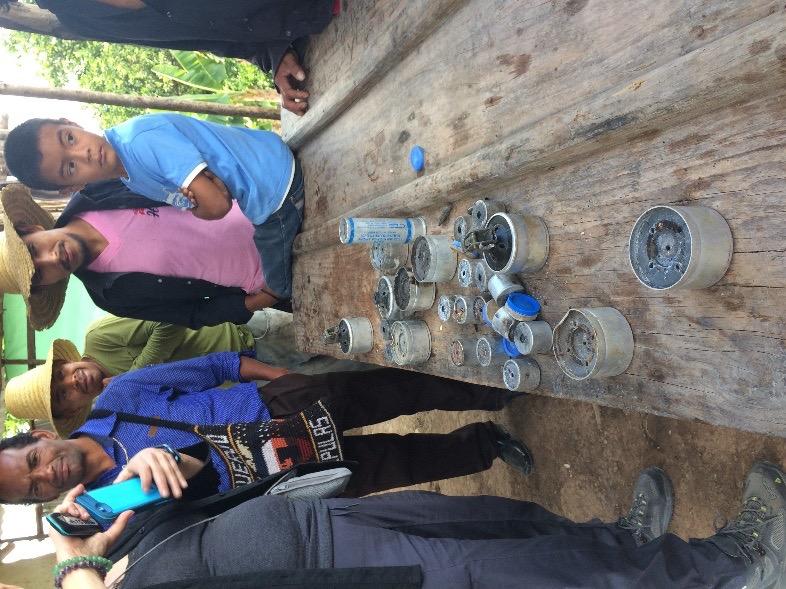
Our group from Chicago stood staring at the rough wooden table, which held 2-dozen or so spent tear gas canisters plus a couple of bullet shells, collected by the 9th of July community from the area immediately surrounding the place where we stood. The largest one, designed to be fired from a rifle, was stamped “Made in U.S.A.” The connection between U.S. military and police aid to Honduras and the violent persecution of impoverished Honduran farmers was crystal clear in the objects before us.
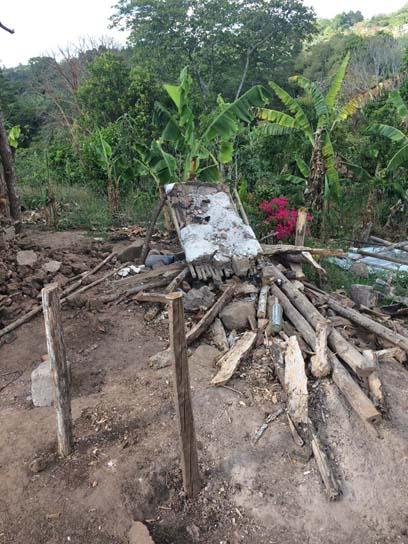
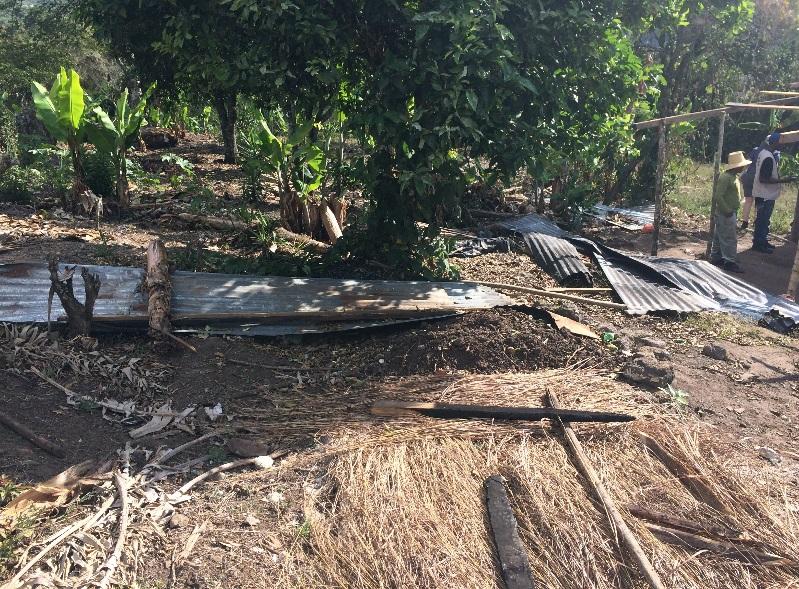
The original rural community of 28 families has been tear gassed and evicted from their simple hand-built dwellings and cultivated land 26 times by the Honduran military or police. In the last surprise eviction on January 13, 2017, the police followed the fleeing people, even women and children, across the valley, shooting all the way. One man was shot in the leg and a pregnant woman miscarried after running away, panicked, from the “security” forces. They also tore down and burned houses, stole or burned possessions and tools left in and around the houses, and cut down some of the fruit trees and crops. Since then, the women and children, have moved to a nearby community while the men have re-occupied the land.
“Thanks be to God that we continue to live on this land,” said one man. After each violent eviction, the community’s commitment is to return and resettle on the land within 24 hours of being pushed off, rebuilding houses and restoring crops as they are able. The bravery and endurance that this strategy demands is fed by their hope of land ownership. They experience other threats in the form of arrest warrants against them and death threats from the national or military police. “Every time we receive a group of international people who are in solidarity with us, it gives us the strength to keep going on with our struggle,” said another.
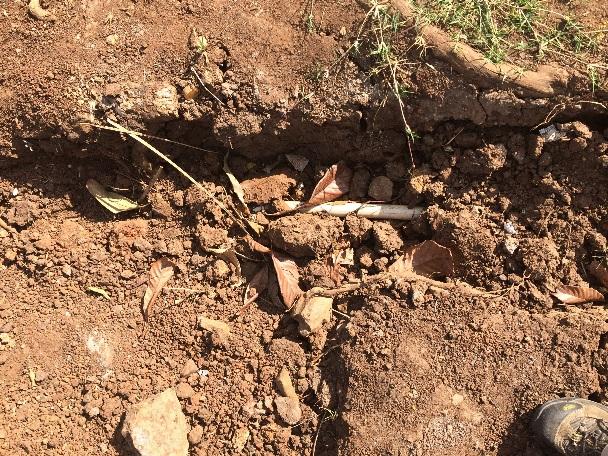
The irony is that if this were a pioneer story under a different government, these people would be heroes. This community of formerly landless people, organized by the Central Nacional de Trabajadores del Campo (CNTC--National Center of Rural Workers), settled this abandoned and desert-like land in 2010. They dug trenches and bought plastic pipes to carry water for irrigation and drinking water from a spring 3 kilometers away. They planted fruit trees and other crops to feed their families. A dry hillside turned green and provided a way to make a living. The CNTC which was founded in 1985 currently works with 203 other communities, like 9th of July, who are reclaiming land and putting it to good use in 14 of the 18 Honduran departments (what in the U.S. would be called states).
The National Agrarian Reform Law of 1962 provided that idle land fit for farming could be expropriated and awarded to indigent and landless persons by the government, and land was redistributed under this Law. However, the 1993 neoliberal Law of Agrarian Modernization gutted the agrarian reform,increasing inequality among landowners and increasing the desperation of the rural poor. To force the issue and obtain the land essential for rural people to support themselves and their families, the CNTC works with landless people to settle and plant on unused, undeveloped or abandoned land. The occupants then file for title with the Honduran National Agrarian Institute (INA) after some years of living on and working the land. 
The 9th of July community is the most persecuted of all the CNTC communities, but others usually are evicted at least several times in their struggle to obtain land. How long do they have to be on the land before they are granted a title? “We don’t know with this administration. They are not on our side,” answered one man. Some of the CNTC communities have lived and worked on their land for 15-20 years and still do not have title. Others have succeeded in their efforts.
Putting this into an even larger context for us, CNTC General Secretary Franklin Almendares explained that 64% of Honduran people are rural, impoverished, and displaced or facing displacement from their land for lack of a title to it. 46% live in extreme poverty. “We are not poor—our land is rich—but we are impoverished, because they throw us off the land on which we live and farm. They want to annihilate those who speak out, who protest, who object to and challenge this system.” At the same time, Almendares pointed out, when large corporate landowners take land without having title to it, the government is complicit with their actions and grant them titles.
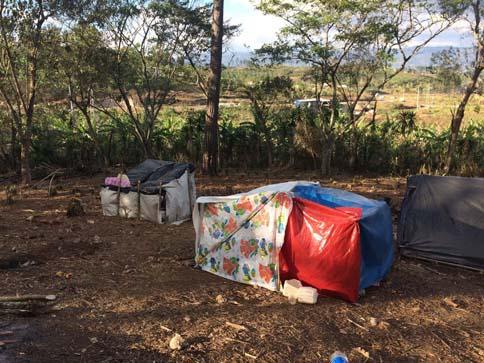
Visiting a second land recuperation project, CNTC organizers led us to a piece of land on a plantation that had been abandoned for decades, its owner living in Tegucigalpa.14 young men and boys, most in their teens and early twenties, had arrived on the land 11 days earlier at night.They had made pup tents from pieces of plastic and canvas held up by sticks for shelter, and had begun clearing trees so that they could begin to create fields to plant. The youngest among them appeared to be around 11 years old. They seemed wary and shy,  vulnerable and scared. Most did not talk to us, letting the CNTC organizers and the elected head of their group explain to us their situation.
All wanted to acquire some land to work on and have something to hope for. They eventually wanted to start a family and needed a way to support them. Without land, they had no hope, and without hope, they had nothing to live for.
The CNTC organizers  told us that after arriving, the group did not sleep for three nights, worried that the police would find them and evict them. They also had not slept outside before with insects and snakes in the area, and they were getting used to that. With encouraging words, the CNTC organizers told the group that eviction is just a passing misfortune on the way to acquiring land and homes and community. Every group had experienced this, and many had eventually earned their titles. They must work and have hope that they, too, will be successful one day, because this path is the only one that offers them any hope.

What can those of us in the U.S. do to stop the persecution of communities working with the CNTC? Call your Congressional Representative’s office, ask to speak with or leave a message for the staff responsible for foreign policy, and request that they co-sponsor H.R. 2199, the Berta Cáceres Human Rights in Honduras Act. This would suspend all U.S. security aid to Honduras, including equipment and training, until they cease their human rights violations. We must stop U.S. funding that enables the Honduran government to use violence against its own people, people who only want a chance to support their families and contribute to the life of their communities.
Related Posts with Thumbnails